Tourist Places Near Ayodhya Within 100 km: A Complete Family Travel Guide
 Santosh Balgir
Domestic
Santosh Balgir
Domestic
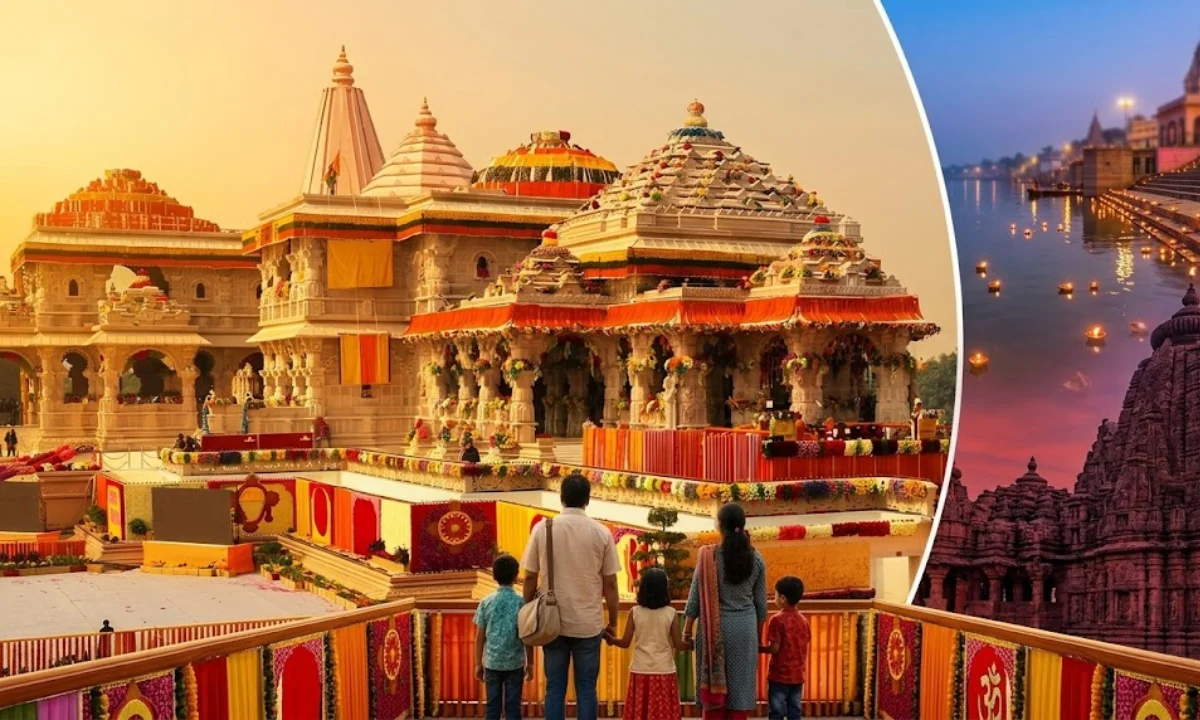
Tourist Places Near Ayodhya Within 100 km: A Complete Family Travel Guide
Ayodhya, the sacred birthplace of Lord Rama, has become one of India’s most visited pilgrimage destinations after the construction of the magnificent Ram Mandir. Every day, thousands of devotees come to seek blessings at the temple. But many visitors do not realize that within a short drive of 100 km, there are several hidden gems waiting to be explored.
Why limit your trip to just Ayodhya? The surrounding region is rich with history, spirituality, and natural beauty. Whether you are a pilgrim wanting to complete a wider Ramayana circuit, a family looking for a peaceful weekend getaway, or a history enthusiast eager to see ancient Buddhist monasteries and Nawabi architecture – these places near Ayodhya have something for everyone.
The best part? Most of these destinations are easily accessible by road, and the improved infrastructure in Uttar Pradesh has made travel smoother than ever. From the serene ghats of Faizabad to the ancient Buddhist ruins of Shravasti, from the unique Parijaat tree in Barabanki to the tranquil ashrams of Bharat Kund – you can explore a diverse range of attractions without spending hours on the road.
In this guide, we will take you through the top 8 tourist places near Ayodhya within 100 km. You will find detailed information about distance, key attractions, why families love these spots, practical travel tips, and a sample itinerary. Let us begin your journey beyond the Ram Mandir.
1. Faizabad – The Historic Twin City (7 km)
Faizabad is literally the closest destination from Ayodhya. In fact, before the renaming, Ayodhya and Faizabad were considered twin cities. Faizabad served as the capital of the Awadh region during the Nawabi era. While Ayodhya is all about spirituality and temples, Faizabad offers a peaceful contrast with its gardens, tombs, and colonial-era buildings.
Key Attractions in Faizabad
| Place | Description | Why Families Like It |
|---|---|---|
| Guptar Ghat | A holy ghat on the banks of the Saryu River. It is believed that Lord Rama took Jal Samadhi (departed from Earth) here. | Peaceful riverside atmosphere. Evening aarti is beautiful. Kids can sit by the steps and watch the river flow. |
| Gulab Bari | A garden complex built by Nawab Shuja-ud-Daula. It houses his tomb and is surrounded by rose gardens and fountains. | Clean, well-maintained gardens. Plenty of space for children to walk. Excellent photo opportunities. |
| Bahu Begum ka Maqbara | An elegant mausoleum built for the wife of Nawab Shuja-ud-Daula. It shows beautiful Mughal and Awadhi architecture. | Less crowded. Older children interested in history will enjoy the stories. |
| Faizabad Museum | A small museum displaying artifacts from the Nawabi period, including weapons, paintings, and manuscripts. | Educational for school-going children. Quick visit of 30-45 minutes. |
| Ramkatha Park | A well-maintained park with statues and murals depicting scenes from the Ramayana. | Very family-friendly. Open spaces for kids to run. Benches for elderly to rest. |
Why families love Faizabad: After the noise and crowds of the Ram Mandir area, Faizabad feels like a breath of fresh air. The roads are wider, the gardens are cleaner, and the pace is slower. You can easily spend half a day here without feeling rushed.
Travel Tips:
- Distance from Ayodhya: Only 7 km (15-20 minutes by auto or cab).
- Best time to visit: Early morning (for Guptar Ghat) or late afternoon (for Gulab Bari).
- Suggested duration: 3-4 hours.
- Food: There are good vegetarian restaurants near the bus stand and in the city center.
Most pilgrims visit Ayodhya and leave the same day. But adding Faizabad to your trip costs almost no extra travel time and gives you a completely different flavor of the region – the royal Nawabi heritage. If you have elderly parents who cannot walk much, Gulab Bari has flat pathways and benches. If you have children, they will love the open gardens. Do not skip Faizabad.
2. Shravasti – The Ancient Buddhist Pilgrimage (97 km)
Shravasti is about 97 km from Ayodhya, just within our 100 km limit. This is one of the most important Buddhist pilgrimage sites in India. Lord Buddha is said to have spent 24 rainy seasons (Varshavas) here – more than any other place. He performed many miracles and gave several important sermons in Shravasti.
Key Attractions in Shravasti
| Place | Description | Why Families Like It |
|---|---|---|
| Jetavana Monastery | The main attraction. This is where Buddha stayed and taught for many years. The ruins are spread over a large area and include stupas, monasteries, and the famous Anand Bodhi Tree. | Very peaceful. Kids can run around the open ruins. The story of Angulimala (a reformed thief) fascinates children. |
| Anand Bodhi Tree | A sacred fig tree grown from a cutting of the original Bodh Gaya tree. It marks the spot where Buddha spent his first rainy season in Shravasti. | Respectful and quiet atmosphere. Families can sit under the tree for meditation or rest. |
| Angulimala Stupa | A stupa dedicated to Angulimala, a bandit who was transformed by Buddha and became a monk. The story is a powerful lesson about redemption. | Children (8+ years) are very curious about this story. Parents can teach values of forgiveness and change. |
| Sobhanath Temple | A Jain temple believed to be the birthplace of the 3rd Jain Tirthankara, Lord Sambhavanath. | For families interested in Jainism, this is an important stop. The temple is clean and calm. |
Why families love Shravasti: It is not crowded like Ayodhya. The ruins are spread across a vast, green landscape. You will see many international tourists (from Thailand, Sri Lanka, Japan) which adds to the global spiritual vibe. There are no aggressive vendors. It is a place where you can actually have a conversation with your children about history, religion, and morality without shouting over noise.
Travel Tips:
- Distance: 97 km from Ayodhya (approx 2.5 hours drive via NH 927).
- Best time to visit: October to March ( winters are pleasant, summers are very hot).
- Suggested duration: Full day (start at 8 AM, return by 6 PM).
- Facilities: Basic eateries and small hotels near the site. Carry your own water and snacks.
- Entry fee: ₹25 for Indians (for main monument area).
Commentary: Shravasti is often overlooked by Ram Mandir visitors because it is “Buddhist” and they think it has no connection to their faith. But Shravasti’s history is intertwined with India’s spiritual fabric. Also, the drive from Ayodhya to Shravasti passes through lovely rural countryside – sugarcane fields, village life, and small markets. If you have a full day spare, choose Shravasti over a second day inside crowded Ayodhya. Your children will remember the peaceful ruins more than the long queues.
3. Barabanki – Home of the Ancient Parijaat Tree (100 km)
Barabanki is exactly 100 km from Ayodhya. It is a district known for its Sufi shrine, an ancient sacred tree, and several temples. Barabanki offers a mix of Hindu, Muslim, and folk traditions. It is less touristy, which means you will experience real, rural Uttar Pradesh.
Key Attractions in Barabanki
| Place | Description | Why Families Like It |
|---|---|---|
| Dewa Sharif Dargah | A famous Sufi shrine dedicated to Haji Waris Ali Shah. It is known for its annual Urs festival and for its message of unity among all religions. | The dargah is open to all. The atmosphere is very peaceful. Families can sit in the large courtyard. |
| Parijaat Tree (Kintoor) | An ancient sacred tree (Banyan) believed to be over 1000 years old. Some legends connect it to the Mahabharata period. It is one of the few known Parijaat trees in the world. | A unique natural wonder. Children are amazed by the huge, sprawling branches. Great for photos. |
| Siddheshwar Nath Temple | An ancient Shiva temple located in the heart of Barabanki town. | Simple, clean temple. Good for a quick prayers stop. |
| Chota Lucknow | A nickname given to Barabanki because of its similar culture and biryani shops. | Families who love food can try authentic Awadhi cuisine here. |
Why families love Barabanki: It is a real offbeat destination. You will not find crowds. The Parijaat tree alone is worth the drive. The tree is massive – its branches have spread so wide that they are supported by iron pillars. It is a living monument. Children will talk about this tree for years. Also, the drive from Ayodhya to Barabanki via the Faizabad road is smooth and scenic.
Travel Tips:
- Distance: 100 km (approx. 2.5 to 3 hours drive).
- Best time to visit: November to February (summer heat is intense).
- Suggested duration: 4-5 hours (half-day trip combined with something else).
- Food: Try the local biryani and kebabs. Several family restaurants on the main road.
- Road condition: Good roads most of the way, but last few km to Parijaat tree are narrow.
Barabanki is not for everyone. If you are looking for polished tourist facilities, you will be disappointed. But if you are an adventurous family that enjoys discovering hidden, authentic places, then drive to Barabanki. The Parijaat tree is something you cannot see anywhere else in North India. And the Dewa Sharif dargah teaches children about India’s composite culture – where people of all faiths come together.
4. Gonda – Temples and Wildlife (50 km)
Gonda is about 50 km from Ayodhya. It is often used as a transit point, but it has its own attractions. Gonda is home to the Kapilmuni Temple, which is associated with sage Kapila. It also has the Bakhira Bird Sanctuary, making it a good spot for families who enjoy nature.
Key Attractions in Gonda
| Place | Description | Why Families Like It |
|---|---|---|
| Kapilmuni Temple | A temple dedicated to sage Kapila, an important figure in Hindu philosophy. It is set on the banks of a pond and has a very calm atmosphere. | Very peaceful. No crowds. Good for a short stop and meditation. |
| Bakhira Bird Sanctuary | A large wetland area that attracts migratory birds in winter. You can see cranes, ducks, and many other water birds. | Children love bird watching. You can bring binoculars. The sanctuary is not commercialized. |
| Saryu Barrage | A dam and irrigation project on the Saryu River. It offers a nice view and a place to sit. | Good for an evening picnic. Families can sit by the water and watch the sunset. |
Why families love Gonda: It is very close to Ayodhya (only 1 to 1.5 hours drive). You can combine Gonda with another place like Barabanki or Shravasti. The bird sanctuary is especially beautiful between December and February when thousands of migratory birds arrive.
Travel Tips:
- Distance: 50 km (approx. 1 hour 15 minutes via NH 27).
- Best time to visit: November to February for bird sanctuary; October to March for temples.
- Suggested duration: Half-day (4-5 hours).
- Facilities: Limited. Carry your own food and water. Basic restaurants in Gonda town.
The Bakhira Bird Sanctuary is not a “developed” tourist spot. There are no ticket booths, no guides, no souvenir shops. That is exactly why it is special. You will see real wetlands, real birds, and real village life. If your family enjoys nature over malls, Gonda is a worthy addition.
5. Bharat Kund – A Hidden Ramayana Site (20 km)
Bharat Kund is located in the village of Bharatpur, about 20 km from Ayodhya. This is a very significant but less-known site connected to the Ramayana. It is believed that Lord Rama’s brother, Bharat, lived here and performed penance for 14 years while Rama was in exile.
Key Attractions in Bharat Kund
| Place | Description | Why Families Like It |
|---|---|---|
| Bharat Kund | A sacred pond or kund where Bharat is said to have bathed and meditated. The water is considered holy. | A deeply peaceful place. Because it is not commercialized, families can spend quiet time. |
| Bharat Temple | A small temple dedicated to Bharat. The idol is unique – Bharat is shown with his feet in the posture of waiting. | Great for teaching children about the characters of Ramayana beyond just Rama and Sita. |
| Surrounding Ashrams | Several small ashrams and meditation centers in the area. | If your family is into spirituality or yoga, this is a wonderful spot. |
Why families love Bharat Kund: It is only 20 km from Ayodhya, so you can add it as a half-morning trip without much effort. The mythological connection is direct and powerful. Most tourists do not know about this place, so you will have it almost to yourselves.
Travel Tips:
- Distance: 20 km from Ayodhya (approx. 30-40 minutes via Ayodhya-Bharatpur road).
- Best time to visit: Early morning or late afternoon.
- Suggested duration: 1.5 to 2 hours.
- Facilities: Very basic. No restaurants. Carry your own water. There is a small tea stall.
This is the kind of destination that makes a pilgrimage complete. You have seen the Ram Mandir. You have seen Hanuman Garhi. But have you seen where Bharat waited for his brother? Bharat Kund is humility, devotion, and loyalty made into stone and water. Do not miss it if you have an extra half-day.
6. Makhauda Dham – The Place of King Dasharatha’s Yagya (15 km)
Makhauda Dham is located about 15 km from Ayodhya. This is the place where King Dasharatha (Lord Rama’s father) performed the Putrakameshti Yagya (a fire sacrifice) to beget sons. After this yagya, Lord Rama and his brothers were born. This is a very important site for Ramayana devotees.
Key Attractions in Makhauda Dham
| Place | Description | Why Families Like It |
|---|---|---|
| Dasharatha Yagya Site | The exact spot where the yagya is believed to have been performed. There is a temple and a small kund (pond). | Children feel connected to the story they have heard about Rama’s birth. The site is well-maintained. |
| Manorama River | A small river that flows near the site. The surroundings are green and peaceful. | Families can sit by the riverbank. Very calming. |
| Annual Fair | On Chaitra Purnima (full moon day in March/April), a big fair is held here. | If your travel dates coincide, your children will enjoy the fair atmosphere – rides, food stalls, and local crafts. |
Why families love Makhauda Dham: It is very close to Ayodhya (only 15 km). The story of the yagya is a key part of the Ramayana. Visiting this place makes the epic come alive. Also, the site is clean, and there is ample parking.
Travel Tips:
- Distance: 15 km (approx. 30 minutes).
- Best time: Any time except peak summer (April-June).
- Suggested duration: 1 to 1.5 hours.
- Facilities: Small shops selling prasad and coconuts. No proper restaurants.
Many families drive past Makhauda Dham on their way from Ayodhya to other places. Stop here. It takes only an hour. Show your children where the story of Rama actually began – not in Ayodhya’s palace, but in this simple yagya ground where a king prayed for a son.
7. Ratnapuri – A Jain Pilgrimage (24 km)
Ratnapuri is about 24 km from Ayodhya. It is the birthplace of Lord Suvidhinath, the 9th Tirthankara of Jainism. For Jain families, this is a very important pilgrimage site. But even if you are not Jain, the temple complex is worth visiting for its serene atmosphere and beautiful architecture.
Key Attractions in Ratnapuri
| Place | Description | Why Families Like It |
|---|---|---|
| Ratnapuri Jain Temple | A grand white marble temple dedicated to Lord Suvidhinath. The complex is very clean and peaceful. | Exceptionally clean. Marble floors. Families can sit quietly. Children enjoy the open spaces. |
| Dharamshala (Pilgrim Rest House) | Well-maintained accommodation for pilgrims. | If you want a overnight stay in a calm environment away from Ayodhya’s rush, this is an option. |
| Bhojanshala (Community Kitchen) | A free or very low-cost vegetarian meal facility for pilgrims. | Families can experience community dining. The food is simple, hygienic, and made with devotion. |
Why families love Ratnapuri: The temple is immaculate. There are no crowds. The atmosphere is meditative. And the Jain community here is very welcoming. It is a completely different experience from the loud, busy temples of Ayodhya.
Travel Tips:
- Distance: 24 km (approx. 30-40 minutes via NH 27).
- Best time: Any season. The temple is indoors and comfortable.
- Suggested duration: 1.5 to 2 hours.
- Facilities: Excellent. Clean toilets, drinking water, rest areas.
Commentary: India’s spiritual landscape is diverse. Visiting Ratnapuri teaches children about Jainism – its principles of non-violence, its Tirthankaras, and its architectural beauty. Do not skip this just because you are a Hindu pilgrim. Ratnapuri is a gem.
8) Chhapaiya – Swaminarayan Birthplace (45 km)
Chhapaiya is about 45 km from Ayodhya. It is the birthplace of Lord Swaminarayan, the founder of the Swaminarayan tradition. This is a major pilgrimage site for followers of the Swaminarayan Sampradaya. The temple complex here is well-developed and very family-friendly.
Key Attractions in Chhapaiya
| Place | Description | Why Families Like It |
|---|---|---|
| Birthplace Temple | A beautiful temple built at the exact spot where Lord Swaminarayan was born. The architecture is delicate and colorful. | Very clean and well-organized. There are gardens and benches. Children enjoy the open area. |
| Smriti Mandir | A memorial temple with displays about the life and teachings of Lord Swaminarayan. | Educational. Children learn about a modern-era spiritual leader (18th-19th century). |
| Science of Morals Exhibition | An interactive exhibition that teaches moral values using stories and audio-visual displays. | Kids love this. It is like a mini theme park of values. Not preachy, but fun. |
Why families love Chhapaiya: It is not just a temple – it is a well-planned pilgrimage complex. Everything from parking to food to restrooms is taken care of. If you are traveling with small children or elderly parents, Chhapaiya is very comfortable. The Swaminarayan organization runs it very efficiently.
Travel Tips:
- Distance: 45 km (approx. 1 to 1.5 hours).
- Best time: Any time. The complex is indoors and outdoors.
- Suggested duration: 2 to 3 hours (can be a half-day trip).
- Facilities: Excellent. Food court, clean toilets, water, and even a small souvenir shop.
Even if you are not a Swaminarayan follower, visit Chhapaiya. The level of cleanliness, organization, and devotion is remarkable. It sets a standard for how pilgrimage sites should be maintained. Your family will leave feeling not just spiritually uplifted but also impressed by the management.
Complete Comparison Table of All 8 Destinations
| Destination | Distance from Ayodhya | Driving Time | Best Season | Suggested Duration | Family Friendliness (1-5) | Main Attraction Type |
|---|---|---|---|---|---|---|
| Faizabad | 7 km | 15-20 min | Oct-Mar | 3-4 hours | 5 | Historical / Spiritual |
| Shravasti | 97 km | 2.5 hours | Nov-Feb | Full day | 4 | Buddhist / Historical |
| Barabanki | 100 km | 2.5-3 hours | Nov-Feb | 4-5 hours | 3 | Natural wonder / Sufi |
| Gonda | 50 km | 1 hour 15 min | Nov-Feb | 4 hours | 3 | Temple / Wildlife |
| Bharat Kund | 20 km | 30-40 min | Oct-Mar | 1.5-2 hours | 4 | Ramayana site |
| Makhauda Dham | 15 km | 30 min | Oct-Mar | 1-1.5 hours | 4 | Ramayana site |
| Ratnapuri | 24 km | 30-40 min | Any season | 1.5-2 hours | 5 | Jain pilgrimage |
| Chhapaiya | 45 km | 1-1.5 hours | Any season | 2-3 hours | 5 | Swaminarayan temple |
Sample 3-Day Itinerary (Ayodhya + Nearby Places)
| Day | Morning (9 AM – 1 PM) | Afternoon (1 PM – 5 PM) | Evening (5 PM onwards) |
|---|---|---|---|
| Day 1 | Ram Mandir Darshan (Ayodhya) | Lunch. Visit Hanuman Garhi and Kanak Bhawan. | Ram Ki Paidi Ghat for evening aarti. Stay in Ayodhya. |
| Day 2 | Drive to Shravasti (2.5 hrs). Visit Jetavana Monastery and Anand Bodhi Tree. | Lunch in Shravasti. Visit Angulimala Stupa. | Drive back to Ayodhya. Relax. |
| Day 3 | Morning visit to Faizabad (Guptar Ghat + Gulab Bari) + Bharat Kund (20 km) or Makhauda Dham (15 km). | Lunch. If time permits, visit Chhapaiya (45 km) or Ratnapuri (24 km). | Depart from Ayodhya. |
Alternative short trip (2 days): If you have only 2 days, split as Day 1: Ayodhya + Faizabad; Day 2: Shravasti (day trip) OR Bharat Kund + Makhauda Dham + Chhapaiya (half-day each).
Best Time to Visit These Places
| Season | Months | Weather | Suitable For |
|---|---|---|---|
| Winter | November to February | Pleasant, cool (5°C – 20°C) | ✅ Excellent for all destinations |
| Summer | March to June | Very hot (35°C – 45°C) | ❌ Avoid all except indoor temples |
| Monsoon | July to September | Humid, occasional rain | ⚠️ Okay but ruins become slippery |
Recommendation: Plan your trip between November and February. Winter mornings are perfect for outdoor sites like Shravasti ruins and Guptar Ghat. Summer should be avoided because most of these places have open areas with little shade.
Practical Travel Tips for Families
| Tip | Why It Matters |
|---|---|
| Book a private cab | Local autos are fine for Faizabad, but for Shravasti, Barabanki, and Gonda, a private cab (₹2,500-3,500 per day) is safer and more comfortable for families. |
| Carry water and snacks | Outside Ayodhya city, food options are limited. Pack biscuits, fruits, and at least 2 liters of water per person. |
| Start early (by 8 AM) | The best sites (Guptar Ghat, Bharat Kund, Makhauda Dham) are most peaceful early morning. Also, you avoid afternoon heat. |
| Dress modestly | All these are religious or historical sites. Shoulders and knees must be covered. Remove shoes before entering any temple or stupa. |
| Keep cash handy | Many small shops and donation boxes do not accept digital payments. Keep ₹500-1000 in small notes. |
| Check temple timings | Most temples close between 12 PM and 4 PM for lunch/rest. Plan your visit accordingly. |
| Carry a first-aid kit | Basic medicines for headache, stomach issues, and band-aids are essential, especially when traveling with children. |
| Book hotel in Ayodhya | Stay in Ayodhya itself (many new hotels have opened near the railway station and Ram Path). Day trips from Ayodhya to these places are easy. |
Frequently Asked Questions
Q1: Can I cover Shravasti and Barabanki in one day from Ayodhya?
A: Yes, but it will be rushed. Both are on different sides of Ayodhya. Better to do Shravasti (full day) and Barabanki (half day) on separate days.
Q2: Are there good restaurants near these places?
A: In Faizabad, there are several. In Shravasti, there are basic eateries near the bus stand. For Barabanki and Gonda, restaurants are inside the towns, not near the sites. Carry your own food for a smoother experience.
Q3: Is photography allowed at all these places?
A: Yes, for external photography. Inside temple sanctums, photography is usually prohibited. At the Shravasti ruins, there is a fee for video cameras.
Q4: Are these places wheelchair accessible?
A: Faizabad (Gulab Bari) and Ratnapuri have good wheelchair access. Shravasti ruins have uneven paths and stairs, so not fully accessible. Makhauda Dham and Bharat Kund have some stairs.
Q5: Can I visit all 8 places in a 4-day trip?
A: No, that would be too hectic. Choose 4-5 places based on your interests. A realistic plan: Ayodhya (1 day), Faizabad + Bharat Kund + Makhauda Dham (half day), Shravasti (1 full day), and either Chhapaiya or Ratnapuri (half day).
Q6: Are there any wildlife sanctuaries near Ayodhya within 100 km?
A: Bakhira Bird Sanctuary in Gonda is the closest (approx 50 km). It is best visited in winter (December-February).
Q7: Is Shravasti safe for a family trip?
A: Yes, very safe. The site is under the care of the Archaeological Survey of India. There are security guards. The nearby town of Shravasti has basic amenities.
Q8: What is the entry fee for Shravasti?
A: For Indian citizens, ₹25 per person. For SAARC countries, ₹25. For other foreign nationals, ₹300. Children under 15 are free (generally).
Q9: Are guides available at these places?
A: At Shravasti, local guides can be hired for ₹300-500. At Faizabad and other places, guides are not commonly available. Read the information boards or download a travel app.
Q10: Can I do a day trip to Shravasti from Ayodhya and return same day?
A: Yes. Leave Ayodhya by 7 AM, reach Shravasti by 9:30 AM. Spend 4-5 hours. Leave by 2:30 PM, reach Ayodhya by 5 PM. It is a full day but very manageable.
My Final Words
Ayodhya is much more than its famous temple. The land around it is soaked in stories – of Rama’s birth, of Bharat’s waiting, of Buddha’s teachings, of Nawabi grace, and of Jain Tirthankaras. The 100 km radius around Ayodhya is a treasure trove of experiences waiting to be discovered.
For families, these destinations offer a perfect balance. There are places for young children (open gardens, bird sanctuary, peaceful ruins), for parents (temples, history), and for elderly members (flat paths, peaceful ghats, clean temples). You do not need to spend all your time standing in queues at Ram Mandir. You can create a multi-dimensional spiritual and historical tour.
Plan your trip for winter. Book a comfortable stay in Ayodhya. Hire a reliable cab driver. Pack snacks and water. And then, drive out to these hidden gems. Each one will leave you with a memory that lasts far longer than any souvenir.
The land around Ayodhya is waiting. Go explore.




Categories
- Domestic 33
- News 9
- Info 8
- Budget Travel 5
- popular 5
- International 3
- Upcoming 1
Share This Post