Bhangarh Fort Ghost Stories: India’s Most Haunted Place, Dark Legends & Travel Guide
 Santosh Balgir
Domestic
Santosh Balgir
Domestic
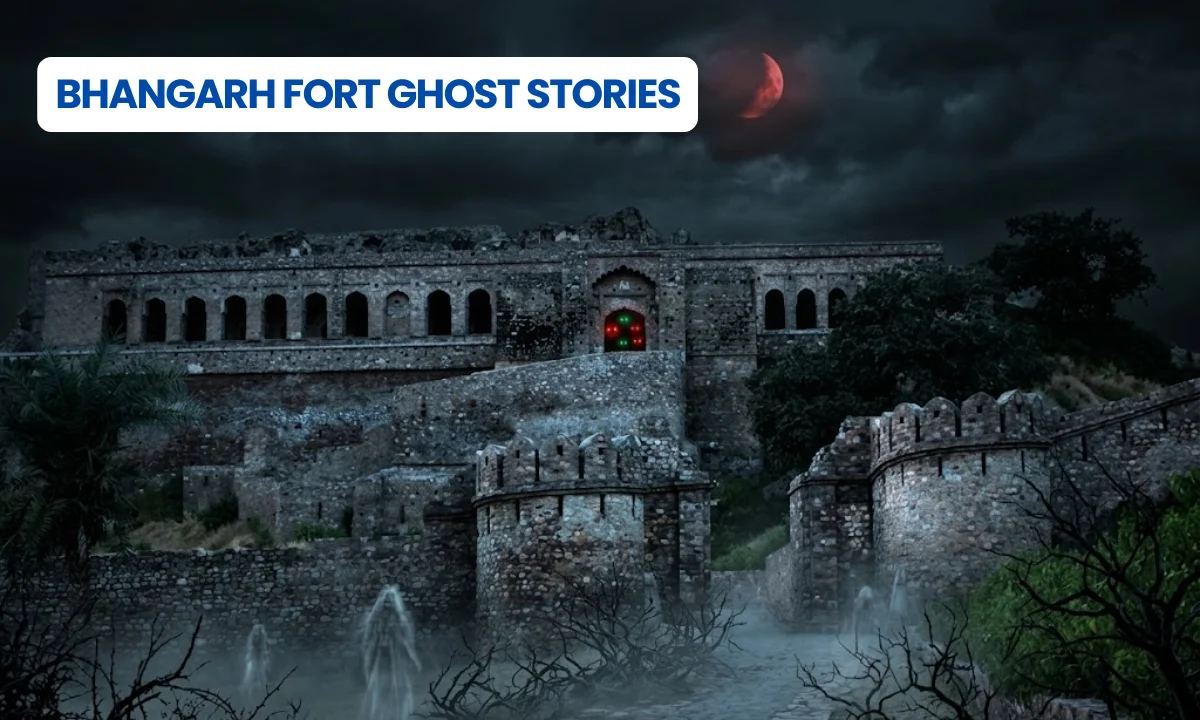
Bhangarh Fort Ghost Stories
There are places in India that make you feel something unexplainable the moment you visit. A chill that has nothing to do with temperature. A silence that feels too deliberate. A sense that the air itself is watching you. Bhangarh Fort in Rajasthan is one of those places.
Located in the Alwar district, roughly 83 kilometers from Jaipur and about 270 kilometers from Delhi, Bhangarh is officially tagged as India’s most haunted place. The Archaeological Survey of India has placed signboards at the entrance prohibiting entry after sunset. Locals from surrounding villages refuse to go near the ruins at night. Stories of people who stayed past dark and never came back have been circulating for generations.
But Bhangarh is not just about ghost stories. It is a real 17th-century fort city with genuine history, remarkable architecture, and a mysterious decline that historians still debate. What makes Bhangarh so compelling is that the supernatural legends and the historical facts exist side by side, and neither fully explains everything.
The Real History of Bhangarh Fort
Before getting to ghosts and curses, understand what Bhangarh actually was. It was not always a ruin.
Bhangarh Fort was built in 1573 by Raja Madho Singh I, the younger brother of Man Singh I who was one of the famous Navratnas in Emperor Akbar's court. Madho Singh chose this location in the Aravalli hills of present-day Alwar district strategically. It controlled important trade routes between Delhi and Ajmer and the natural terrain provided excellent defensive advantages.
The fort was designed not just as a military installation but as a complete walled city. At its peak, Bhangarh housed an estimated 10,000 to 12,000 residents. There were four grand entrance gates named Lahori Gate, Ajmeri Gate, Phulbari Gate, and Delhi Gate. Multiple Hindu temples were built including shrines to Hanuman, Gopinath, Someshwar, and Keshav Rai. There was a bustling marketplace, royal palaces with elaborate courtyards, dancers' havelis, and residential quarters for nobles.
The city prospered through the 16th and 17th centuries as an important administrative and commercial center. By any measure, Bhangarh was a thriving urban settlement. The architecture was sophisticated, blending Rajput and Mughal design principles. Local red sandstone was used for construction with marble detailing in certain sections. Many of these structures still stand today, remarkably preserved despite centuries of abandonment.
Then something happened. The city was empty by the early 19th century.
Historians point to a combination of factors. A severe famine struck the region around 1720, forcing mass migration. Then in 1783, during the political instability following the weakening of Mughal authority, Bhangarh was attacked. Water scarcity and shifting trade routes also contributed. By 1800, the once vibrant city was a ghost town in the literal non-supernatural sense. The population had simply left.
But the legends say something much darker caused the fall of Bhangarh.
The Two Famous Curses of Bhangarh
These are the stories that made Bhangarh famous. Both have been circulating for over 200 years. Both involve warnings that were ignored. Both end in catastrophic ruin.
Curse 1: Guru Balu Nath and the Shadow
Long before Raja Madho Singh decided to build his fort city, the hillside of Bhangarh was the meditation ground of Guru Balu Nath, a revered ascetic who had spent decades in spiritual practice in the peace of the Aravalli hills.
When Madho Singh selected this location for his new city, he went to the holy man to seek his blessing. Guru Balu Nath agreed to allow the construction but imposed one strict condition. He said build your fort, expand your city, but ensure that the shadow of your palace never falls upon my meditation spot. The day your shadows touch my sacred ground, the city will crumble and remain uninhabited forever.
Madho Singh accepted the condition and construction began. For some years, the agreement held. But then one of his ambitious successors decided to heighten the palace walls and fortifications, probably for defensive purposes. Nobody considered or nobody cared that a taller palace would cast longer shadows.
The inevitable happened. As the enlarged palace grew taller, its shadow stretched further across the hillside during certain hours and eventually fell upon Guru Balu Nath's sacred meditation spot. The moment the shadow touched the holy ground, the sage opened his eyes from meditation and pronounced the curse that sealed Bhangarh's fate.
The city began experiencing calamities. Crop failures, disease outbreaks, invasion. And according to the legend, Bhangarh never recovered.
There is one piece of the legend that visitors still notice today. None of the structures at Bhangarh Fort have intact roofs. Local folklore says this is because of the curse. Any attempt to construct a roof over Bhangarh's buildings results in the structure collapsing. Skeptics will correctly point out that 300 to 400 years of exposure and natural decay explains missing roofs perfectly well. But believers point out that even the ASI during its conservation work has not attempted to restore roofing at Bhangarh. Whether that is coincidence or something else is for you to decide.
Curse 2: Princess Ratnavati and the Sorcerer Singhia
This is the more famous legend. The one that most people know when they hear about Bhangarh.
Princess Ratnavati of Bhangarh was renowned across Rajputana as one of the most beautiful princesses of her time. When she came of age, suitors arrived from royal families across India. She was celebrated, protected, and sought after.
Among those who became obsessed with her beauty was a tantrik named Singhia, a practitioner of black magic who lived on the outskirts of Bhangarh. He knew that as a lowly sorcerer he could never approach a princess of royal blood through legitimate means. So he decided to use dark arts.
One day Princess Ratnavati visited the local bazaar with her attendants to purchase fragrant ittar, a traditional perfume oil. Singhia saw his opportunity. He enchanted a bottle of ittar with a powerful love potion. His plan was that once the princess applied the perfume, she would fall hopelessly in love with him.
But Princess Ratnavati was perceptive. As she examined the bottle, she sensed something wrong. She noticed the sorcerer watching from the shadows. She realized the bottle was enchanted.
Instead of using the perfume or discarding it safely, she made a swift decision. She threw the bottle forcefully against a large boulder nearby. The moment the enchanted liquid touched the stone, the magic activated in an unintended direction. The boulder began rolling down the hillside, gathering speed, and moved straight toward Singhia.
The sorcerer tried to flee but could not escape. The enchanted boulder crushed him. As he lay dying, he used his last breath to pronounce a terrible curse on Bhangarh. He said no soul shall find peace in this city. Bhangarh will be destroyed. Everyone inside its walls will perish without rebirth. The princess, the king, and every inhabitant will meet a tragic end and no one will ever rebuild what falls.
According to legend, within a year of Singhia's death, Bhangarh was attacked by invading forces. The city was sacked. Princess Ratnavati died in the battle along with thousands of inhabitants. The survivors fled. Bhangarh was left to decay.
Local folklore adds one more layer to this legend. Princess Ratnavati and Singhia are said to be reincarnated in every generation, replaying their fatal confrontation until the curse is somehow broken. Some believe this is why paranormal activity continues at Bhangarh. The spirits of the cursed princess and the vengeful sorcerer are thought to remain trapped, unable to find peace.
Lesser Known Legends of Bhangarh
Beyond the two main curses, Bhangarh has gathered additional folklore over the centuries.
The Dancer's Curse
Some locals speak of a beautiful dancer, a tawaif who performed in the royal court, who fell deeply in love with a prince. When he rejected her, she cursed the fort, declaring that no music or celebration would ever be heard there again. Visitors often remark that Bhangarh feels unnaturally silent despite the presence of wind and wildlife. Whether you attribute that to the dancer's curse or to the natural quiet of an abandoned settlement is a matter of perspective.
The Midnight Marketplace
Local folklore says that on full moon nights, the abandoned bazaar comes alive with the sounds of traders, bargaining voices, and jingling bells. Ghostly echoes of Bhangarh's busy past. Some villagers claim to have heard these sounds from a distance but refuse to go closer to investigate.
The Vanishing Travelers
Stories circulate about travelers and curious explorers who entered Bhangarh after sunset and were never seen again. There are no formally documented disappearances on record but these tales continue in local oral tradition and are repeated by locals to this day.
The Jin Pret Temple
Inside the fort at the upper levels, there is a small poorly lit room that locals call the Jin Pret temple. Some locals, including one person encountered by a traveler who wrote about her visit, come to pay respects here. They believe the Jin Pret protects those who honor them and harms those who do not. Whether this is a genuine local religious practice or part of the haunted mythology is difficult to separate.
Paranormal Experiences Reported by Visitors
Over decades, visitors have reported various unexplained experiences at Bhangarh. None are scientifically verified but they are consistently described across many independent accounts.
The most common experience is a feeling of being watched or followed, particularly in the upper levels of the fort where there are long corridors and rooms that could easily be empty or could hold anything in poor lighting.
Some visitors report a sudden drop in temperature in specific areas of the fort that does not correspond to the surrounding environment. Rajasthan is hot and dry. An unexplained cold spot stands out.
Strange sounds are frequently mentioned. Footsteps in empty sections. Whispers that seem to come from inside walls. Faint music that has no identifiable source. Some visitors describe hearing what sounds like activity in the abandoned bazaar area long after all other tourists have left.
A story that circulates widely involves a boy who fell into a steep well inside the fort during a night visit. His friends rescued him but while rushing him to hospital, their vehicle was involved in an accident and all three died. This story appears in multiple sources but the specific incident has not been formally documented.
Another frequently repeated account involves a group that bribed the gate keeper to let them inside after sunset. Despite warnings, they went in and found a boy sitting alone in a room that had no accessible doors or windows.
A local man encountered by a traveler at the top of the fort described watching a friend become suddenly possessed while descending from the upper levels in late afternoon. The friend began screaming, making incoherent sounds, and ran uncontrollably until collapsing near one of the temple walls. After being revived, he said he felt someone get onto his back and try to twist his neck. The local man said he now only visits before 3 PM.
What Does the Archaeological Survey of India Actually Say?
This is important context that most articles miss.
The ASI has never officially declared Bhangarh haunted. The famous signboard at the entrance which warns visitors not to enter before sunrise or after sunset is their standard notice for all protected monuments under their jurisdiction.
The practical reasons for the restriction at Bhangarh specifically include several real safety concerns. The ruins are structurally unstable and dangerous to navigate in darkness. The area borders the Sariska Tiger Reserve and leopards, wild boars, and other dangerous wildlife move through the area after dark. There is no lighting and cell phone reception is poor. Past incidents of vandalism and inappropriate behavior after dark also prompted the restriction.
However, the ASI signboards have unintentionally strengthened the haunted reputation significantly. Many visitors interpret the official government restriction as implicit acknowledgment of supernatural danger. Whether that interpretation is correct is another matter entirely.
The Historical Truth Behind the Legends
Historians and archaeologists offer a less dramatic but still fascinating explanation for Bhangarh's abandonment.
The 1720 famine devastated the region and forced large-scale migration. The 1783 invasion during political instability after Mughal decline dealt a final blow. Water scarcity became critical as the region's ecological balance shifted. Economic decline followed as trade routes moved away.
Psychologists and folklorists who study oral traditions suggest that communities often create supernatural narratives to explain traumatic historical events. The sudden violent end of a thriving city would have been deeply traumatic for survivors. The curse legends may have served as a way to process collective trauma and make sense of incomprehensible loss.
The legends also served a very practical purpose. They discouraged people from settling in structurally unsafe ruins by attributing danger to supernatural causes rather than physical decay. If you tell people a sorcerer cursed the land, they will stay away more reliably than if you tell them the walls might fall on them.
Both explanations can be true simultaneously.
Visiting Bhangarh Fort: Practical Information
Timings
The fort is open from 6 AM to 6 PM. Entry before sunrise or after sunset is strictly prohibited by the ASI. This rule is enforced. Do not try to stay after sunset and do not try to enter early.
Entry Fee
Indian nationals: ₹25 (₹20 if paying digitally). Foreign nationals: ₹300 (₹250 if paying digitally).
Best Time to Visit
October to February is ideal. Rajasthan winters are pleasant and the fort is comfortable to walk through. Avoid April to June when the heat is extreme. July to September is monsoon season.
How to Reach Bhangarh
From Delhi: Bhangarh is approximately 270 to 280 kilometers from Delhi. Taking NH 8 toward Jaipur and then cutting toward Alwar is the most common route. Total drive time is 4 to 5 hours depending on traffic. Self-drive or hired cab is the most practical option. Public transport to Bhangarh is not reliable. The nearest railway station to Bhangarh is at Dausa which is about 30 km away.
From Jaipur: Bhangarh is 83 to 90 kilometers from Jaipur. A day trip from Jaipur takes about 2 hours each way. This is one of the most popular ways to visit.
From Sariska: Sariska Tiger Reserve is only 30 kilometers from Bhangarh. Combining the two in a single overnight trip from Delhi is a very popular option. Stay in Sariska overnight, do an evening safari at the tiger reserve, and visit Bhangarh the next morning.
What to Expect Inside?
The fort complex is quite large. From the main gate, a stone path leads through the ruins of the old bazaar where shops once lined both sides. Further inside are the Nachni ki Haveli or dancer's house, the Someshwar Temple with a small stepwell beside it, and then a ramp and stairs leading up to the upper fort levels. The palace ruins are at the highest point with views over the surrounding landscape.
Monkeys and langurs are present throughout the complex and are bold around food. Keep snacks in bags. Do not feed them.
The fort is surrounded by forest and borders Sariska National Park. Wildlife including leopards and wild boars moves through the area after dark, which is one very practical reason to be inside the gates well before closing time.
There are no restaurants or cafes inside or immediately near the fort. Carry water and snacks. There are no petrol pumps in the immediate area. Fill up before you reach Bhangarh.
Is Bhangarh Fort Actually Haunted?
This is the question everyone asks and the honest answer is that nobody knows.
What is certain is that Bhangarh is one of the most atmospheric places in India. The combination of genuine historical tragedy, centuries of abandonment, remarkable architectural ruins, dense forest surroundings, restricted nighttime access, and two powerful curse legends creates an environment where the mind naturally becomes hyperalert. Whether that heightened state of awareness then interprets ordinary sounds and sights as supernatural is a matter of individual psychology.
The paranormal experiences that many visitors describe are consistent across different people who visited at different times without knowing each other's accounts. That consistency is interesting regardless of what it proves.
What is equally certain is that the historical explanation for Bhangarh's decline, famine, invasion, water scarcity, and political instability, is completely real and fully sufficient to explain why the city was abandoned. Both of these things can be true. Real history and genuine mystery can coexist.
Final Words For Those Planning To Visit
Go during daylight hours. Leave before 6 PM. Carry water and wear comfortable shoes. Watch the monkeys. Explore the upper fort where the views and the atmosphere are most striking.
Talk to locals if you can. The stories they tell are far more interesting than any guidebook version. And when you stand in the long corridor at the top of the palace ruins and look out over the empty landscape with the forest stretching away on all sides and the silence pressing in, you will understand why this place has held people's imagination for three centuries.
Whether that feeling is supernatural or simply the weight of real history, Bhangarh Fort is unlike anywhere else in India.




Categories
- Domestic 33
- News 9
- Info 8
- Budget Travel 5
- popular 5
- International 3
- Upcoming 1
Share This Post