Dhak Bahiri Caves Importance & Why Visit: The Ultimate Adventure & Spiritual Guide
 Santosh Balgir
Domestic
Santosh Balgir
Domestic
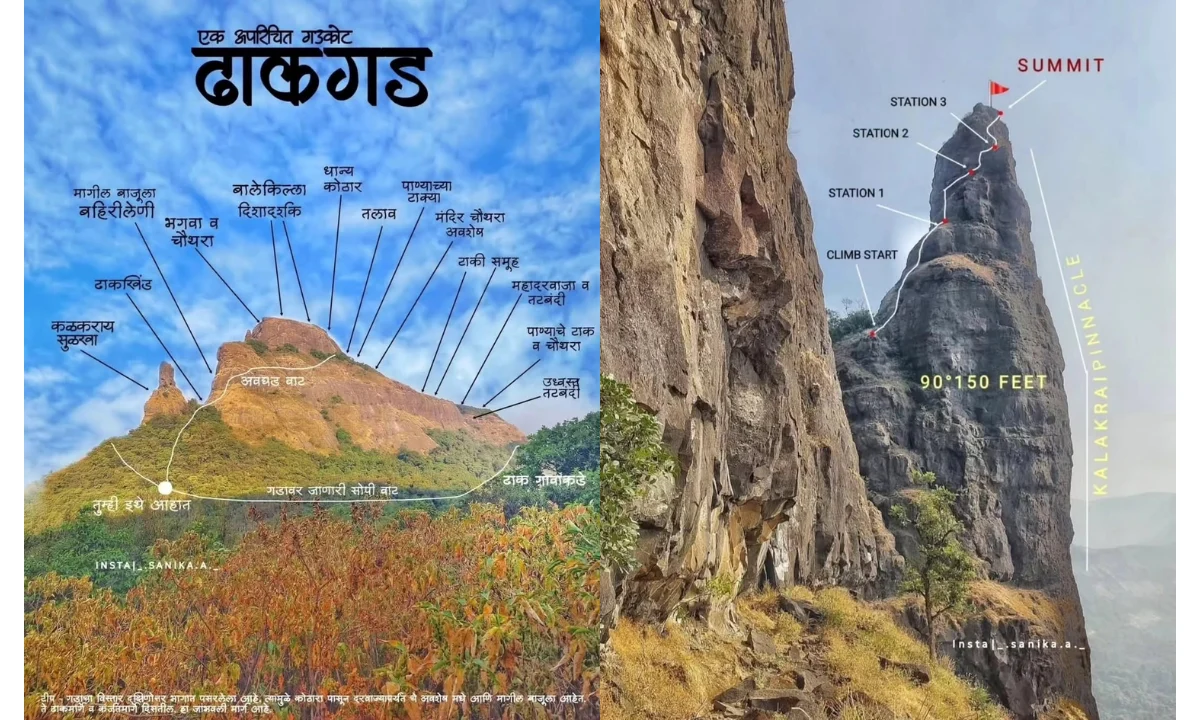
Dhak Bahiri Caves Importance & Why Visit: The Ultimate Adventure & Spiritual Guide
Hidden high in the rugged cliffs of the Sahyadri mountain range, just a few hours from the bustling cities of Mumbai and Pune, lies a destination that defies easy categorization. Dhak Bahiri is not merely a cave. It is a fortress of faith. It is a precipice of adrenaline. It is a natural temple perched at the edge of the abyss.
This destination is one of the most thrilling, unique, and spiritually intense treks in all of Maharashtra. For centuries, local tribes and devotees have made the arduous pilgrimage to the cave shrine of Lord Bahiri, a fierce form of Kalabhairav. For adventure seekers, the site represents a technical challenge that tests not just physical strength, but mental fortitude.
If you are looking for a simple walk in the woods, this is not for you. If you are looking to push your limits, confront your fear of heights, and experience a profound sense of accomplishment in a place where folklore and raw nature collide, then read on. This comprehensive guide will explain the secrets of the Dhak Bahiri caves, why it is considered one of the most important trekking destinations in the Western Ghats, and how you can (safely) experience it.
What Is Dhak Bahiri? (The Basics)
Before we dive into the adventure and the chills, let’s understand where we are going.
| Feature | Information |
|---|---|
| Name | Dhak Bahiri Caves / Dhak Bahiri Trek |
| Location | Sahyadri mountain range, approx. 15 km from Karjat, Maharashtra |
| Base Village | Jambhavali or Sandashi (also known as Sandshi) |
| Nearby Cities | Lonavala (approx. 30 km), Karjat (approx. 15 km), Khopoli (approx. 30 km) |
| Type | Rock-cut cave temple, technical trekking spot |
| Difficulty Grade | Medium to Difficult (Technical climbing required) |
| Altitude | Approximately 2,700 to 3,000 feet above sea level |
| Primary Attraction | The naturally formed cave, the shrine of Lord Bahiri (Kalabhairav), the vertical rock climb, and the panoramic views of the Konkan valley |
Location Insight: The caves are situated near the Rajmachi region. While many are familiar with the twin forts of Rajmachi (Shrivardhan and Manaranjan), Dhak Bahiri remains a more elusive and specialized destination for experienced trekkers. The base village of Sandashi is about 45 minutes to 1 hour by cab from Karjat railway station.
The Importance of Dhak Bahiri Caves (Spiritual & Historical)
Why is this site revered? Why do people risk a dangerous climb to a dark hole in a cliff wall?
1. The Seat of Lord Bahiri (The Fierce Protector)
The primary importance of the Dhak Bahiri cave is religious. The cave houses a natural Shrine of Lord Bahiri, a manifestation of Lord Shiva or Kalabhairav.
- Who is Lord Bahiri? “Bahiri” translates to “outside” or “external,” but in the local context, Lord Bahiri is considered the guardian of the wilderness. Unlike the gentle deities in city temples, Bahiri is a fierce, ascetic god. The locals believe he roams the mountains, protecting the forests and the tribes who live in them. The cave is not a place of worldly prayers; it is a place to seek strength, courage, and protection from evil.
- The “Karma” Legend: There is a powerful local belief associated with the final climb. It is said that if you climb with a pure heart and true devotion, the mountain will hold you. But if you climb with arrogance, ego, or bad intentions, the rocks will become slippery, and the mountain will test you or turn you away. This legend lends a deep spiritual weight to the physical act of climbing.
2. The Legend of the Holy Vessels (The Curse of the Cave)
One of the most famous folktales associated with Dhak Bahiri involves a set of ancient cooking vessels (handi/kadhais) believed to have been gifted by Lord Bahiri himself.
- The Story: Legend says that these mystical vessels were left in the cave. Pilgrims could request them for feasts, and they would automatically produce unlimited food. However, a strict rule was attached: the vessels must never be taken outside the cave.
- The Curse activated: Someone in history dared to break this rule. They tried to carry one of the vessels out of the sanctum. As the story goes, the person immediately lost their eyesight or their footing on the path, and the vessel vanished back into the rock, never to be found again. Even today, visitors are strictly cautioned against removing any item from the cave.
3. The Engineering Marvel of Nature
Unlike the man-made Buddhist caves like Karla or Bhaja nearby, the Dhak Bahiri cave is a naturally formed cavern. Its importance lies in its dramatic location. It is carved by wind and water into the vertical face of a cliff. The main chamber is spacious, reportedly large enough to accommodate up to 50 people.
Why Visit Dhak Bahiri? (The 5 Main Reasons)
Now let’s answer the core question: Despite the difficulty, why should you visit?
1. The Thrill of the Technical Climb (The “Rock of Testing”)
This is the primary draw for most. The trek is not a typical “walk uphill.” The final 20–30 minutes involve an exposed, technical scramble.
- The “First Patch”: You will encounter nearly vertical rock-cut steps where a fixed rope is anchored to the wall. You must pull yourself up, foothold by foothold, with the valley dropping away beside you.
- The “Second Patch” (The Ladder): Arguably the most intense section, often called the “Ladder.” It involves navigating a steep 80-degree incline using tree trunks, iron rods, and ropes embedded into the rock face. You have to rely entirely on your upper body strength as you ascend a near-vertical wall with nothing below you but thin air. This is where your mental strength is truly tested.
- The Nerve-Wracking Traverse: There is a very narrow shelf on the cliff wall, barely as wide as your foot. You must edge sideways (a technique called “scrambling”) with your back to the mountain and your heels hanging over the void.
2. Unbeatable 360-Degree Panoramic Views
The reward at the top is a visual feast. The cave mouth serves as a massive window looking out over the Konkan region. On a clear day, you can see deep green valleys, winding rivers, the peak of Rajgad and Torna, and the backwaters of the Shivsagar Dam.
3. A True Test of Character
For many, the trek is a journey of self-discovery. Standing at the base of the vertical climb, looking up, many people freeze with fear. Overcoming that fear, controlling your breath, and trusting your skills and the guide is a transformative experience. People who have completed Dhak Bahiri often rank it as their most cherished trekking memory in Maharashtra, precisely because it was hard-won.
4. An Overnight Camping Experience
Unlike many one-day treks, the plateau near the cave allows for overnight camping. The feeling of sleeping in a natural rock shelter, watching the stars appear, and waking up to sunrise over the valleys is unparalleled. The ambiance of sitting inside the ancient cave, sharing stories as the mist rolls in, is a unique experience that strengthens bonds between friends.
5. The Hall of Echoes and “Sudden Cold” Phenomenon
Many visitors report a strange phenomenon inside the deepest part of the cave. A sudden, intense, icy draft of air wraps around you, even on the hottest day. The acoustics inside the cave also create a unique “Hall of Echoes” effect where your whispers bounce back amplified. These natural anomalies add to the mystical reputation of the place.
The Dhak Bahiri Trek (A Detailed Guide)
Here is what you need to know to plan the trip. Please note: This is not a leisurely hike. Preparation is mandatory.
Trek Distance, Duration & Route
| Parameter | Detail |
|---|---|
| Total Trek Distance (Round Trip) | Approximately 6 to 8 kilometers |
| Total Time (Round Trip) | Usually 4 to 7 hours depending on experience and crowd |
| Starting Point | Sandashi or Jambhavali village (near Karjat) |
| Initial Phase | Trek through dense forest. Scenic and gradual incline. (About 45 mins – 1 hour) |
| Mid Phase | Rocky patches and boulders. The climb becomes steeper. (About 1 – 2 hours) |
| Final Phase (The Crux) | Approach the main rock face. This is where the fixed ropes and vertical climbing begin. (About 30 mins – 1 hour for the actual climb) |
| Descent | Descending the vertical sections is often considered even harder than climbing up, as you have to look down into the valley. Requires careful balance and cooperation. |
Best Time to Visit
| Season | Feasibility | Recommendation |
|---|---|---|
| Monsoon (June – September) | ❌ NOT Recommended | The rocks become slick with moss and water. The risk of slipping and falling is fatally high. The stream crossing becomes dangerous. |
| Winter (October – February) | ✅ Ideal | This is the peak season. The weather is cool, the skies are clear, providing the best panoramic views. The humidity is low, preserving energy. |
| Summer (March – May) | ⚠️ Possible but Avoid | The trek becomes extremely hot and draining. You will need a lot of water (3+ litres), and the rocks will be very hot to touch. Not recommended for beginners. |
Verdict: Plan your trip strictly between October and February.
How to Reach
- By Train (Recommended):
- Catch a local or express train from Mumbai (CSMT) or Dadar or from Pune to Karjat station.
- Karjat is the most common gateway to the Raigad and Lonavala region.
- By Road from Base Village:
- Once you reach Karjat, you can hire a private cab or jeep to drive you to the base village of Sandashi. The drive takes about 45 minutes to 1 hour.
- You can also hire a rickshaw or take a local bus, but a jeep/cab is recommended for a group as the roads can be bumpy.
- Self-Drive:
- From Pune: Travel via Lonavala towards Karjat, then turn off to the road for Sandashi.
- GPS Coordinates for Base Village: Search for “Sandashi Village” on Google Maps. From there, the trail is primarily northeast.
Essential Gear and Packing List
Packing correctly is non-negotiable for survival and safety.
- Clothing & Gear:
- High-ankle Trekking Shoes: Must have a deep tread. Sports shoes are useless on mud and slopes.
- Full-sleeved Quick-Dry T-shirts: For protection against the sun and scratches from bushes.
- Trek Pants: Avoid shorts.
- Raincoat / Poncho: Necessary even in winter, as weather in the mountains changes instantly.
- Non-slip Gloves: Crucial for gripping the ropes tightly during the vertical climb, especially the metal rods.
- Technical Gear:
- Ropes and Harness: Experienced guides will provide these. Never attempt the final vertical patch without a safety harness unless you are an expert climber.
- Sustenance:
- Water: Carry at least 3-4 liters per person. There is NO water source near the cave.
- Energy Snacks: Dry fruits, energy bars, glucose biscuits, and a light packed lunch (like a sandwich or thepla). Eat something solid before the climb for energy.
- First Aid:
- Band-aids, antiseptic cream, salt (for leeches, especially if visiting just after a rain spell), crepe bandage, and anti-allergy medication.
Nearby Attractions
If you are planning a weekend, you can combine the Dhak Bahiri trek with other nearby gems.
- Rajmachi Fort (Shrivardhan and Manaranjan): Located very close to the base village. Rajmachi is an easier fort trek with massive stone ramparts and a famous waterfall during the rains. You can do the Rajmachi trek on the same weekend.
- Kondane Caves: Ancient Buddhist rock-cut caves dating back to the 1st century BC. They are quieter than the Karla Caves, offering a peaceful meditation spot and a fantastic view of a massive waterfall during the rainy season. Located very close to Karjat.
- Karjat & Ulhas Valley: The valley itself is famous for river rafting in the Ulhas River, especially in the pre-monsoon and early winter months.
- Pawna Lake: About an hour’s drive away, Pawna Lake (near Lonavala) is famous for camping. After a draining, adventurous trek like Dhak Bahiri, relaxing by Pawna Lake with a bonfire is an excellent way to decompress the next day.
Safety Tips & Crucial Warnings
This is the most critical part of the article to read.
- Do Not Go Alone: Always go with an experienced trekking group or a local guide. Do not attempt the final technical climb without someone who knows the exact route and the rock condition.
- Listen to the “Locals”: The local villagers at the base know the mountain best. If they warn you that the trek is not safe due to weather or conditions, listen to them.
- One at a Time: On the narrow cliff edges and the vertical ladder section, only one person should move at a time. Do not rush or overtake. This is to prevent falling rock debris from hitting others.
- Secure Your Phone: Do not take out your phone for a selfie during the most dangerous segments of the climb. Put it in a zipped pocket. Wait until you are safely in the cave to take photos.
- Travel Light: The lighter your backpack, the less strain on your core as you lean back while rappelling and climbing.
- Medical Fitness: This trek is not for those with severe vertigo, heart conditions, or back problems.
Frequently Asked Questions (FAQs)
Q1. Is Dhak Bahiri trek suitable for beginners?
A: Generally, no. It is classified as a medium to difficult trek. Beginners can try if they are physically fit and mentally prepared to face heights, but it is strongly advised to go with a guide who provides safety line ropes.
Q2. Can we visit Dhak Bahiri in the monsoon?
A: No. It is extremely dangerous. The rocks become covered in algae, making them as slippery as ice. Do not risk the trek between June and September.
Q3. Are there any food stalls on the route?
A: No. There are a few small vendors at the base village (Sandashi). You must carry your lunch and 3-4 liters of water. There is absolutely no water source on the plateau or the climb.
Q4. Is there mobile network coverage?
A: You lose network within the first hour of the trek. BSNL and Jio sometimes connect intermittently at the top depending on the weather, but do not rely on it.
Q5. Is it really as scary as it looks on social media?
A: It looks terrifying in videos because the camera angle emphasizes the drop. In reality, it is a very controlled vertical climb with fixed ropes. While it is 80 degrees steep, adrenaline kicks in, and having a rope provides confidence. It looks scarier than it actually is, but it is still extremely physically challenging.
Q6. What is the cost for a Dhak Bahiri trek?
A: Organized trek packages cost anywhere from ₹800 to ₹1,500 per person (including guides, local transfers, and from CST Pune, but excluding train tickets). A private taxi from Karjat to Sandashi will cost about ₹800–₹1200 per vehicle.
Final Conclusion
The Dhak Bahiri Caves are not a picnic spot; they are a pilgrimage of courage. They represent a perfect, terrifying, and beautiful symbiosis of faith and adventure. The importance of Dhak Bahiri lies in its ability to strip away your ego. You cannot bribe or cheat your way to the top. You must use your hands, your nerves, and your willpower.
The rewarding feeling of standing inside the ancient cave after climbing the “Rock of Testing,” looking out at the endless Konkan valley, and listening to the wind whistle through the rock is a high that stays with you forever.
If you are tired of the usual Lonavala chikki trail and looking for a raw, memorable challenge with your friends this winter, look no further. Pack your bags, gather your bravest friends, book an experienced guide, and go test your soul on the cliffs of Dhak Bahiri.
Just remember the golden rule of the mountain: Take nothing but photographs. Leave nothing but footprints. Keep nothing but memories. Plan your trip for October 2026 and experience the legend yourself. Share this guide with your trekking buddy today.



Categories
- Domestic 33
- News 9
- Info 8
- Budget Travel 5
- popular 5
- International 3
- Upcoming 1
Share This Post