Top 10 Historical Places In Maharashtra To Visit: 2026 Heritage Guide For Every Traveler
 Santosh Balgir
Domestic
Santosh Balgir
Domestic
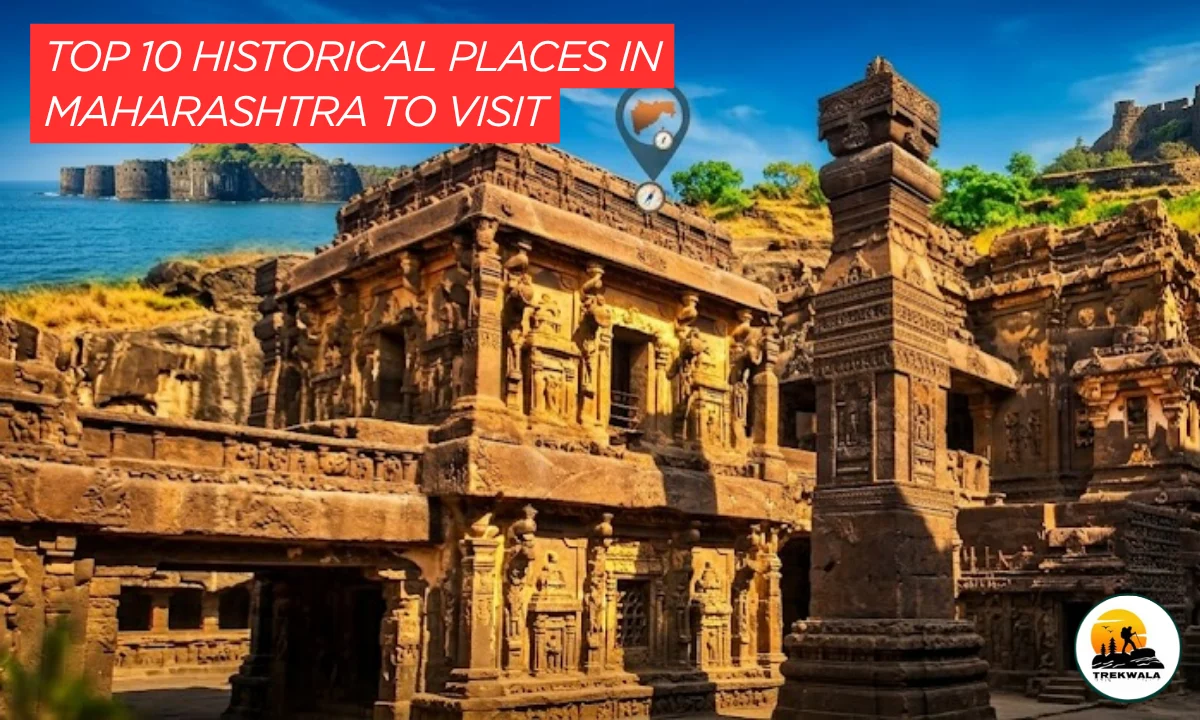
Top 10 Historical Places In Maharashtra To Visit | Representative Image
Maharashtra is not just about Bollywood and vada pav bhai. This state is a treasure trove of history from ancient rock-cut caves that are 2,000 years old to mighty Maratha forts that whisper tales of Shivaji Maharaj’s bravery, and colonial landmarks that take you back to the British era.
In 2025, UNESCO added the Maratha Military Landscapes (11 forts in Maharashtra) to its tentative list, sparking a fresh wave of interest in heritage travel. Whether you are a history buff, a trekking enthusiast, or a family looking for a weekend with a lesson in pride, Maharashtra has something for you.
In this blog post we will cover the top 10 historical places based on 2025-2026 traveler trends, public opinions, and practical tips entry fees, best time to visit, and what real people are saying about these iconic sites.
Key Takeaways From This Guide
- Ajanta & Ellora Caves – UNESCO World Heritage sites with stunning rock-cut art. Ajanta is known for frescoes, Ellora for the monolithic Kailasa Temple.
- Raigad Fort – The capital of Maratha Empire under Shivaji Maharaj. Cable car makes it family-friendly.
- Gateway of India – Iconic Indo-Saracenic arch in Mumbai. Perfect for sunset photos and ferry rides to Elephanta Caves.
- Shaniwar Wada – 18th-century Peshwa palace ruins in Pune. Famous for its light-and-sound show and haunted legends.
- Lohagad Fort – Easy trek near Lonavala with stunning monsoon views and Buddhist caves.
- Chhatrapati Shivaji Maharaj Terminus (CSMT) – Victorian Gothic UNESCO site, one of the busiest railway stations in the world.
- Aga Khan Palace – Gandhi imprisonment site with peaceful gardens and a museum.
- Elephanta Caves – Island caves dedicated to Lord Shiva, accessible by ferry from Mumbai.
- Shivneri Fort – Birthplace of Chhatrapati Shivaji Maharaj, recently boosted by UNESCO nomination.
- Pratapgad Fort – Site of the legendary battle between Shivaji Maharaj and Afzal Khan.
- Most forts have free or minimal entry fees (₹5-₹25 for Indians). Caves cost ₹30-₹40 for Indians.
- Best time to visit: October to March for pleasant weather; monsoon (June-September) makes forts lush green but trekking slippery.
Find Your Perfect Historical Place Based On Your Interest
Not everyone enjoys the same kind of history yaar. Some love ancient caves, some want to trek to mighty forts, and some prefer easy colonial landmarks. Use this filter to pick your vibe.
Ajanta Caves
29 rock-cut Buddhist caves (2nd century BCE – 6th century CE). Famous for vibrant frescoes depicting Jataka tales. A “time capsule of art and spirituality.” Closed on Mondays.
Ellora Caves
34 caves blending Buddhist, Hindu, and Jain architecture. The Kailasa Temple (Cave 16) is a monolithic wonder carved from a single rock. Light-and-sound show in evenings. Closed on Tuesdays.
Raigad Fort
Capital of the Maratha Empire under Shivaji Maharaj. Cable car access makes it family-friendly. See the royal tombs, palaces, and the famous ‘Hirakani Buruj’.
Lohagad Fort
Hill fort with stunning monsoon views and Buddhist caves inside. Easy trek (1 hour). Famous for the ‘Scorpion’s Tail’ point. Free entry. Perfect for a half-day trip from Pune/Mumbai.
Pratapgad Fort
Site of the legendary battle between Shivaji Maharaj and Afzal Khan. Has a Bhavani temple, Afzal Tower, and stunning views of the Western Ghats. Free entry.
Shivneri Fort
Birthplace of Chhatrapati Shivaji Maharaj. Recently nominated for UNESCO’s Maratha Military Landscapes. Simple but strategic design. A must-visit for Maratha history lovers.
Gateway of India
Iconic basalt arch built in 1924 to commemorate King George V’s visit. Overlooks the Arabian Sea. Ferry point to Elephanta Caves. Free entry, best at sunset.
CSMT (Victoria Terminus)
UNESCO World Heritage site, a stunning example of Victorian Gothic architecture. Still a functioning railway station. Marvel at the turrets, carved stone animals, and clock tower.
Shaniwar Wada
18th-century palace-fortress of the Peshwas. Mostly in ruins after a fire, but the massive gates, fountains, and gardens remain. Evening light-and-sound show is a hit. Haunted legends add thrill.
Aga Khan Palace
Built in 1892, this palace served as a prison for Mahatma Gandhi, Kasturba Gandhi, and Sarojini Naidu during Quit India Movement. Gandhi’s ashes are enshrined here. Italian-arch architecture and peaceful gardens.
Elephanta Caves
5th-8th century rock-cut temples dedicated to Lord Shiva. The massive Trimurti sculpture (three-faced Shiva) is world-famous. A short ferry ride from Gateway of India makes it a favorite day trip.
Pro tip from heritage travelers in 2025-2026: For forts like Raigad and Lohagad, visit during monsoon (July-September) for misty views and waterfalls — but carry a raincoat and wear non-slip shoes. For caves (Ajanta, Ellora, Elephanta), winter (November-February) is best because the weather is cool and the light-and-sound shows run regularly. Book a certified guide at Ellora for ₹500-800 — they bring the Kailasa Temple’s engineering marvels to life. Also, many forts now strictly enforce no-alcohol/no-drugs rules to preserve sanctity — respect that.
Also Read: Budget Hill Station Trips In Maharashtra
Detailed Guide To Top 5 Historical Places In Maharashtra
Based on UNESCO status, visitor popularity, and 2025-2026 traveler sentiment, here are the top 5 historical sites with complete details.
1. Ajanta & Ellora Caves: The Rock-Cut Masterpieces
No heritage trip to Maharashtra is complete without Ajanta and Ellora. They are often clubbed together, but they are about 100 km apart (Aurangabad is the base city). Ajanta (29 caves) is famous for its breathtaking frescoes paintings that have survived 2,000 years. These caves were carved by Buddhist monks as prayer halls and monasteries. The paintings depict Jataka tales (stories of Buddha's previous lives). The colors are still vibrant, and the artistry is mind-blowing.
Ellora (34 caves) is a different beast. It showcases religious harmony Buddhist, Hindu, and Jain caves side by side. But the showstopper is Cave 16, the Kailasa Temple. It is a monolithic structure carved from a single rock from top to bottom. Imagine carving an entire temple complex with pillars, galleries, shrines, and sculptures out of one piece of stone. That's Kailasa. Engineers and architects still don't fully understand how it was done in the 8th century.
Best time to visit: November to February (cool weather). Ajanta closed on Mondays, Ellora on Tuesdays.
Entry fees (Indians): ₹40 per person for each cave complex. Foreigners: ₹600. Light-and-sound show at Ellora: ₹100-₹150.
What travelers are saying: "A time capsule of art and spirituality," "The Kailasa Temple left me speechless how did they do it without modern tools?" Recent tourists praise the conservation efforts and the knowledgeable guides. Some suggest starting early at Ajanta (8 AM) to avoid heat and crowds.
2. Raigad Fort: The Maratha Capital With A Cable Car
Raigad Fort is not just a fort; it's the heart of Maratha pride. Chhatrapati Shivaji Maharaj crowned himself here in 1674 and made it his capital. The fort is perched at 2,700 feet, surrounded by steep valleys on three sides. The only way to reach the top was a series of steps but now, a cable car makes it accessible for everyone, including families and elderly.
Inside, you will see the ruins of the royal court (Durbar Hall), the queen's quarters, and the Samadhi (tomb) of Shivaji Maharaj. The 'Hirakani Buruj' (a wall built over a cliff) has a touching legend a woman named Hirakani climbed down the cliff to nurse her infant and climbed back up, inspiring the construction. The views of the Sahyadri range and the Konkan coast are spectacular.
Best time to visit: October to March. Monsoon makes the trek slippery but the greenery is stunning.
Entry fees: Fort entry ₹10 for Indians. Cable car ₹100 per person round trip. Trekking is free if you want to climb the 1,700 steps (takes 2-3 hours).
What travelers are saying: "Easily accessible, beautiful approach road, ample free parking, well maintained steps, easy climb, fort itself and palace ruins are amazing." Many visitors feel an emotional connection here. The ropeway is praised for making heritage accessible to all.
3. Gateway of India + Elephanta Caves: Mumbai's Heritage Combo
You cannot miss the Gateway of India. Built in 1924, this 26-meter-high basalt arch stands proudly at the edge of the Arabian Sea. It's a perfect spot for a group photo, especially at sunset. From here, you can see the Taj Mahal Palace Hotel (another heritage icon) and the bustling harbor. But the real adventure begins when you take a ferry to Elephanta Caves.
The ferry ride (1 hour) itself is fun you get sea breeze, views of Mumbai skyline, and often dolphins. Elephanta Island has 5 rock-cut caves, with the main cave dedicated to Lord Shiva. The Trimurti a 6-meter-high three-faced Shiva sculpture representing Creator, Preserver, and Destroyer is world-famous. The cave also has panels depicting Shiva's legends like the wedding of Shiva and Parvati.
Best time to visit: November to February. Avoid monsoon (June-September) because ferry services may be disrupted.
Costs: Gateway free. Ferry ₹150-₹200 per person round trip. Elephanta Caves entry: ₹40 for Indians, ₹600 for foreigners. A toy train from the jetty to the cave base costs ₹10-₹20.
What travelers are saying: "A perfect half-day trip from Mumbai. The caves are incredible, but be prepared for monkeys stealing your snacks!" Some visitors note that the caves need better maintenance, but overall the experience is highly rated.
4. Shaniwar Wada: The Haunted Peshwa Palace
Shaniwar Wada in Pune is a 287-year-old palace-fortress built by the Peshwa Bajirao I. Originally, it was a sprawling seven-story complex with fountains, gardens, and halls. But a mysterious fire in 1828 destroyed most of it. What remains today are the massive stone ramparts, five grand gates (the main Delhi Darwaza is stunning), the beautiful fountain (Hazari Karanje), and the ruins of the palace.
The place is famous for its evening light-and-sound show (in Marathi and English) that narrates the story of the Peshwas. Also, it is believed to be haunted legend says you can hear the screams of Narayanrao Peshwa, who was murdered inside, on full moon nights. Whether you believe it or not, it adds a thrilling vibe.
Best time to visit: October to March. The light-and-sound show starts after sunset (check timings locally).
Entry fees: ₹5 for Indians, ₹125 for foreigners. Light-and-sound show: ₹20-₹50 extra.
What travelers are saying: "A historical site with deep connections to the Maratha Empire, making it a must-visit for history enthusiasts." The gardens are well-maintained, and many locals come here for evening walks. The show is praised for its storytelling.
5. Lohagad Fort: The Easy Trek With A View
Lohagad Fort is one of the most accessible and rewarding treks near Mumbai and Pune. It stands at 3,400 feet, but the climb is gradual and easy only about 1 hour from the base village. The fort is known for its massive entrance gate and the 'Vinchu Kata' (Scorpion's Tail) a curved stone wall that looks like a scorpion's tail from above.
Inside the fort, you will find large water cisterns, a few Buddhist caves (Lohagad has small rock-cut caves that monks used), and stunning views of the Pawna Lake and surrounding hills. The best time to visit is during monsoon when the entire region turns emerald green and small waterfalls appear on the trail. The fort is free to enter, making it a favorite for college groups and budget travelers.
Best time to visit: July-September for lush greenery; October-February for pleasant trekking.
Costs: Free entry. Parking at base village ₹50. You can also combine it with Visapur Fort (a more challenging trek right next to it).
What travelers are saying: "Lohagad Fort is a must-visit destination that seamlessly combines history, adventure, and natural beauty." Many recommend starting the trek by 7 AM to avoid heat and crowds on weekends. The view from the top is described as "breathtaking."
Honorable Mentions (Rising In Popularity)
- Shivneri Fort – Birthplace of Shivaji Maharaj, recently nominated for UNESCO. A must for Maratha history buffs.
- Pratapgad Fort – Site of the famous battle with Afzal Khan. Great views and a peaceful temple.
- Sindhudurg Fort – Sea fort built by Shivaji Maharaj in Malvan. Unique because the entrance is hidden from the sea.
- Bibi-ka-Maqbara – The "Taj of the Deccan" in Aurangabad. Built by Aurangzeb's son for his mother.
- Daulatabad Fort – An impregnable hill fort with clever defense mechanisms (false entrances, dark passages).
- Kanheri Caves – 109 Buddhist caves inside Sanjay Gandhi National Park, Mumbai. Perfect for a quick nature+heritage trip.
What Real Travelers Are Saying On Social Media (2025-2026)
Public opinions on X and travel forums show deep pride for Maharashtra's heritage. One user wrote: "Forts in Maharashtra carry deep spiritual and historical meaning... They're not just structures of stone; they feel like sacred shrines of heritage." Strict rules against alcohol/drugs at forts are widely supported to maintain sanctity.
UNESCO excitement is palpable: The recognition of 11 Maratha forts (including Raigad, Shivneri, Lohagad) is celebrated as validation of Maratha military genius. Travelers share awe at cave artistry, fort treks with misty views, and emotional visits to Shivaji-linked places.
Concerns include calls for better guides ("Only trained specialists to spread right knowledge") and removing encroachments. Overall sentiment: Strong admiration for Maharashtra's diverse heritage from ancient caves to warrior forts but a push for responsible tourism that honors the past rather than exploiting it.
2-Day Heritage Circuit Itinerary (Aurangabad + Pune/Mumbai)
If you have only 2 days, here is a suggested itinerary covering two very different heritage styles:
| Day | Morning (9 AM - 1 PM) | Afternoon (2 PM - 6 PM) | Evening (7 PM onwards) |
|---|---|---|---|
| Day 1 (Aurangabad) | Ellora Caves (focus on Kailasa Temple, 3-4 hours) | Bibi-ka-Maqbara (1 hour) + Daulatabad Fort (2 hours) | Light-and-sound show at Ellora (check timings) |
| Day 2 (Pune) | Shaniwar Wada (1.5 hours) + Aga Khan Palace (1.5 hours) | Drive to Lohagad Fort (1.5 hours trek + explore) | Return to Pune/Mumbai. Dinner at a local Maharashtrian restaurant |
Budget Tips & Practical Information
- Best season overall: October to March. Caves and forts are pleasant. Monsoon is great for fort treks but caves can be humid.
- How to reach: Aurangabad (for Ajanta/Ellora) has an airport and railway station. Pune and Mumbai are well-connected by road, rail, and air. For forts near Lonavala/Pune, take a local train or cab.
- Budget for a 2-day heritage trip (per person):
- Train/bus from Mumbai to Aurangabad: ₹400-₹800 (sleeper/AC)
- Stay (budget hotel, sharing): ₹600-₹1,200 per night
- Entry fees (Ellora ₹40, Daulatabad ₹10, Bibi ₹25, Shaniwar Wada ₹5, Lohagad free): ~₹100
- Local transport (shared auto or bus): ₹200-₹300
- Food (local thalis, street food): ₹300-₹500 per day
- Total: ₹2,000 - ₹3,500 (excluding travel to base city)
- What to pack: Comfortable walking shoes (caves have steps, forts have uneven terrain), sunscreen, hat, at least 1 liter water per person, light raincoat if visiting in monsoon, power bank for photos.
- Respect the heritage: Do not deface walls, do not litter, follow photography rules (no flash inside Ajanta caves). Many forts are considered sacred by locals avoid alcohol and loud music.
Maharashtra's historical places are not just tourist attractions they are living stories of art, courage, and ambition. From the serene Buddhist frescoes of Ajanta to the thunderous Kailasa Temple at Ellora, from the strategic heights of Raigad to the bustling Gateway of India, every site has a unique tale. Whether you are a solo traveler, a group of history-loving friends, or a family wanting to teach kids about India's glorious past, these 10 places will leave you inspired. Pack your bags, charge your camera, and get ready to walk through centuries of history.



Categories
- Domestic 33
- News 9
- Info 8
- Budget Travel 5
- popular 5
- International 3
- Upcoming 1
Share This Post