Vande Bharat Jammu To Srinagar – Direct Train Service Starting From April 30, 2026
 Santosh Balgir
News
Santosh Balgir
News
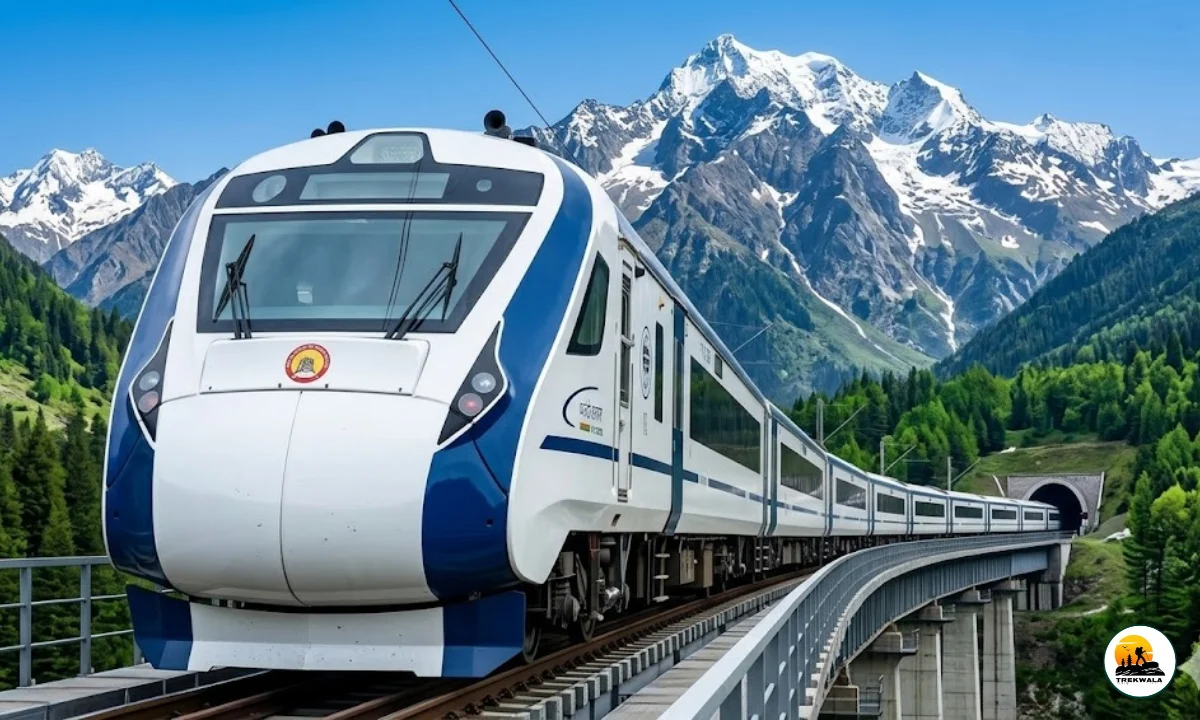
Vande Bharat Jammu To Srinagar
The wait is finally over. After months of anticipation and one major postponement direct Vande Bharat Express train service between Jammu and Srinagar is set to begin on April 30, 2026. This is not just another train launch. It is a moment that residents of Jammu and Kashmir are waiting for across generations.
Union Railway Minister Ashwini Vaishnaw will flag off the service from Jammu Railway Station. Union Minister of State in the PMO, Dr. Jitendra Singh, and Jammu Lok Sabha Member Jugal Kishore Sharma will also be present at the inaugural ceremony.
Why This Train Launch From Jammu To Srinagar Is Historic
To understand why this matters so much, you need to know a little history.
The idea of connecting Kashmir to the Indian railway network through the mountains was a dream that existed for over a century. The Udhampur-Srinagar-Baramulla Rail Link, known as USBRL, is one of the most challenging railway construction projects ever undertaken in the world. It passes through some of the most difficult terrain on earth including deep Himalayan gorges, unstable mountain slopes, and areas that experience severe snowfall for months every year.
The project’s centerpiece is the Chenab Bridge, which at the time of its completion became the world’s highest railway bridge. It stands 359 meters above the Chenab River, which is taller than the Eiffel Tower.
On June 6, 2025, Prime Minister Narendra Modi inaugurated the first direct train service between Katra and Srinagar. That was a Vande Bharat Express and it began operating with an 8-coach rake. Tickets were in high demand from day one and the service proved extremely popular. Reports consistently showed that tickets were booked weeks in advance.
Now that service is being extended further to Jammu, creating a true direct connection between Jammu Tawi station and Srinagar. This is the link that the people of the region had been specifically demanding.
What Happened With the Earlier Launch Date
Not everything went smoothly. March 1, 2026 was announced as the date when the Jammu-Srinagar direct service would begin. That date generated enormous excitement. But the Railway Board deferred the launch due to what was described as unavoidable circumstances.
That deferral was deeply disappointing for people who had been looking forward to it. Social media in J&K expressed considerable frustration. The postponement also affected travel plans for many who had been waiting for the rail option.
Since that deferral, work continued on infrastructure upgrades, security arrangements, and trial runs. By April 2026, all preparations were confirmed as complete. Official sources stated clearly that trains and tracks are ready, trial runs have been successful, and security protocols are in place. April 30 is the confirmed date.
Train Schedule & Route Details
The new Vande Bharat Express will run between Jammu Tawi station and Srinagar. The route passes through Katra, using the USBRL infrastructure including the iconic Chenab Bridge and multiple tunnels through the Himalayan terrain.
Based on available information as of April 2026:
| Detail | Information |
|---|---|
| Jammu Tawi Departure | Around 6:15 to 6:20 AM |
| Srinagar Arrival | Around 11:10 AM |
| Total Journey Time | Approximately 5 hours |
| Srinagar Departure | Around 2:00 PM |
| Jammu Tawi Arrival | Around 6:50 PM |
| Days of Operation | 6 days a week (likely with one weekly off) |
| Train Configuration | 20-coach Vande Bharat rake |
The earlier Katra-Srinagar service used an 8-coach rake. The new direct service will operate with a significantly larger 20-coach configuration to accommodate higher passenger demand on the longer route.
Revised timings will be officially notified by the Railways Department. Always confirm current schedule from IRCTC or the official Indian Railways website before booking.
Journey Time Comparison Jammu to Srinagar: Train vs Road
This is where the impact of this service becomes most clear.
The Jammu to Srinagar road journey via the national highway normally takes around 8 to 10 hours under good conditions. But the Jammu-Srinagar National Highway is one of the most challenging roads in India. It is frequently disrupted by landslides during monsoon, heavy snow during winter, rock falls, and accidents. Seasonal closures that strand thousands of travelers for days are not uncommon. Fog, avalanche warnings, and security restrictions add further unpredictability.
The Vande Bharat cuts that journey to approximately 5 hours in a climate-controlled, comfortable train with no dependence on weather conditions for the tracks to remain open. That is a massive improvement in both travel time and travel reliability.
For daily commuters, government employees who travel between the two capitals, and business travelers, this is genuinely life-changing. The Civil Secretariat itself moves between Jammu and Srinagar seasonally, which means a large number of government employees make this journey regularly. The train will serve them directly.
The Significance of the 20-Coach Rake
The upgrade from 8 coaches to 20 coaches deserves specific attention because it reflects the Railway’s confidence in demand.
The existing Katra-Srinagar service with 8 coaches was reportedly oversubscribed from the start. Tickets would disappear weeks in advance. This created a practical problem. High demand with limited capacity meant that the rail option was not truly accessible for most people who wanted to use it.
The 20-coach configuration roughly 2.5 times the capacity of the current service is a direct response to that demand. It means more seats available per journey, which should translate to better ticket availability and potentially lower premium on bookings.
Who Will Benefit From Vande Bharat Jammu To Srinagar Train Launch
The impact of direct Jammu-Srinagar Vande Bharat connectivity extends across multiple groups.
- Residents of Jammu and Kashmir: The most immediate beneficiaries. The ability to travel between the two capital cities in 5 comfortable hours rather than 8 to 10 uncertain hours on the highway is significant for anyone who makes this journey regularly.
- Government employees: The seasonal migration of the Civil Secretariat between Jammu and Srinagar involves thousands of employees and their families. The train provides a far more reliable and comfortable option for this movement.
- Amarnath Yatra pilgrims: The annual Amarnath pilgrimage begins on July 3, 2026. Pilgrims travel from across India to Jammu and then need to continue to the Srinagar or Pahalgam base camps. Direct rail connectivity allows pilgrims to travel all the way by train from their home cities to Jammu and then onward to Srinagar without depending on the highway.
- Tourists: Kashmir tourism has been growing significantly. The train journey itself, passing over the Chenab Bridge and through Himalayan scenery, is expected to become a tourist attraction in its own right. Rail travel also opens Kashmir to visitors who prefer not to navigate mountain highways.
- Business community: Improved connectivity between the two main commercial centers of J&K reduces transaction costs and travel time for business activity, which benefits the local economy broadly.
The Train Experience: What To Expect On Board
Vande Bharat Express is India’s semi-high-speed train built domestically under the Make in India program. Here is what passengers can expect.
The train offers air-conditioned seating throughout. All seats are rotatable to face the direction of travel. The coaches have large windows which on this particular route will be extremely valuable given the scenic Himalayan landscape. There is an onboard catering service, automated plug doors, bio-vacuum toilets, and passenger information systems showing route and speed.
The journey itself from a scenic perspective will be extraordinary. Passing over the Chenab Bridge at 359 meters above the river is expected to be one of the most memorable railway experiences available anywhere in India. The views of mountain gorges, forests, and the Himalayan landscape through this section of the route are unlike anything on the Indian rail network elsewhere.
The journey through multiple tunnels including some very long ones adds to the unique character of this route. No other train in India traverses terrain quite like this.
What Is Reaction Of The People On Internet (Data From X)
The announcement of the April 30 launch date generated immediate and overwhelmingly positive response across social media, particularly from residents of Jammu and Kashmir. After the disappointment of the March 1 deferral, the confirmation of a new date came with considerable relief and renewed excitement.
People are specifically praising the shift from highway dependence to rail connectivity as a move that addresses a long-standing vulnerability in J&K’s transport infrastructure. Comments about this being a game-changer for connectivity, a milestone for the region, and a symbol of modern India reaching the Kashmir Valley were common across platforms.
The phrase Naya Jammu Kashmir appeared repeatedly in social media posts celebrating the announcement. Tourism stakeholders expressed optimism about increased footfall.
Some voices noted that demand will likely far exceed capacity even with 20 coaches and called for additional frequency. The existing Katra-Srinagar service had proven that point clearly. Whether the Railways add more trains or more frequency on this route will depend on operational experience in the first months.
The National Highway Will Still Be Essential
It is important to note clearly that despite the excitement around the train service, the Jammu-Srinagar National Highway will continue to be the primary artery for goods movement and the majority of passenger traffic between the two divisions.
Train capacity, even with 20 coaches running multiple times a day, cannot accommodate all the people and goods that move between Jammu and Srinagar daily. The railway is an addition to the transport ecosystem, not a replacement for the highway.
What the railway does provide is redundancy. When the highway is blocked due to weather or any other reason, the train becomes the lifeline. That all-weather alternative is arguably the most strategically important aspect of the entire USBRL project.
What Comes Next After Jammu-Srinagar Vande Bharat Train Launch
The April 30 launch of Jammu-Srinagar direct Vande Bharat is significant but it is also part of a larger ongoing story. The USBRL project extends to Baramulla in North Kashmir. Further development and possible additional services on this route will continue as infrastructure matures.
For now, the focus is on April 30 and what is genuinely a landmark moment in Indian railway history and in the story of Jammu and Kashmir’s connectivity.

Categories
- Domestic 33
- News 9
- Info 8
- Budget Travel 5
- popular 5
- International 3
- Upcoming 1
Share This Post