Best Noctourism Places In India 2026: Night Safaris, Stargazing Camps & Moonlit Heritage Walks
 Santosh Balgir
Info
Santosh Balgir
Info
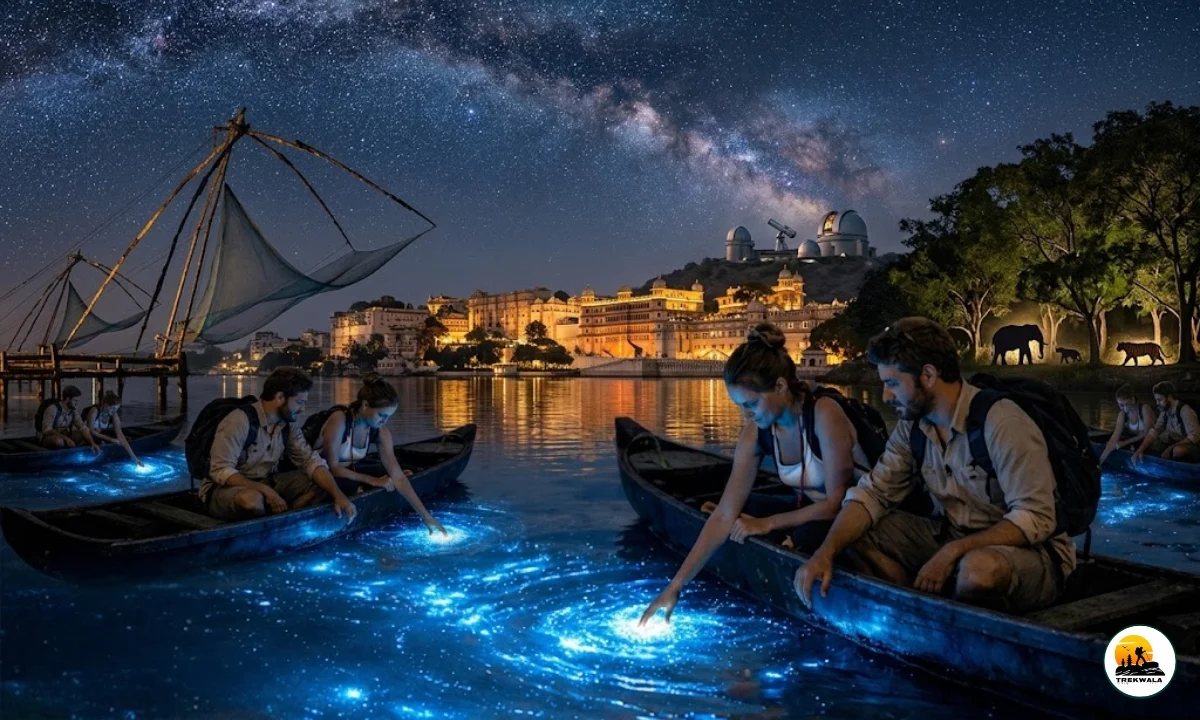
Best Noctourism Places In India 2026
The sun sets. The crowds disappear. The temperature drops. And India transforms into something entirely different. This is Noctourism. Travel designed specifically for the hours after sunset. Not nightlife as in clubs and bars. But night tourism as in moonlit forts, nocturnal wildlife safaris, stargazing in the Himalayas, and heritage walks where history whispers instead of shouts.
Globally the night tourism market was valued at $38.2 billion in 2024 and is expected to reach $80.2 billion by 2033. In 2025, “noctourism” was named a travel word of the year by trend watchers. By 2026, India has fully embraced this shift. Why? Because India’s summers are brutal. Because travelers are tired of overcrowded daytime sites. Because there is something deeply restorative about darkness.
What Is Noctourism? (And Why India Is Perfect For It)
Noctourism combines “nocturnal” and “tourism.” It means intentionally planning travel experiences for the night hours.
| Aspect | Day Tourism | Noctourism |
|---|---|---|
| Crowds | Heavy to unbearable | Minimal to none |
| Temperature | Hot (especially summer) | Cool and comfortable |
| Photography | Harsh shadows, flat light | Dramatic shadows, glowing highlights |
| Wildlife Activity | Limited (animals rest) | High (nocturnal animals active) |
| Mental State | Alert, rushed, checklist mode | Calm, present, sensory mode |
| Cultural Access | Monuments, museums | Aartis, night markets, folk performances |
Why Noctourism is growing in India specifically:
- Summer daytime temperatures in Rajasthan, MP, and UP regularly exceed 40°C (104°F). Night travel makes exploration possible.
- Overstimulation fatigue is real. Constant noise, crowds, and screens exhaust travelers. Darkness offers a reset.
- India already has the cultural infrastructure. Temple rituals at night. Sufi gatherings. Ramadan bazaars. Durga Puja pandals glowing past midnight. Noctourism simply organizes what already exists.
Best Night Safaris In India (Wildlife After Dark)
India’s national parks and tiger reserves shift dramatically after sunset. The forest breathes differently. Eyes gleam from the darkness. Sounds sharpen. Night safaris in India are permitted in designated buffer zones, not core areas. Vehicles use controlled spotlights for brief moments. Guides are trained naturalists.
Here are the operational night safari locations in India as of 2026.
| Safari Location | State | Park Established | What Makes It Special For Night Tourism |
|---|---|---|---|
| Satpura National Park | Madhya Pradesh | 1981 | Only park offering guided night walking safaris + vehicle drives |
| Pench Tiger Reserve (Buffer) | MP / Maharashtra | 1992 | Inspired Rudyard Kipling’s Jungle Book. High leopard sightings at night |
| Ranthambore National Park (Buffer) | Rajasthan | 1980 | Spot hyenas, civets, owls with 12th-century fort ruins in moonlight |
| Kanha Tiger Reserve (Buffer) | Madhya Pradesh | 1955 | Barasingha (swamp deer) active after dark. Very open grasslands |
| Tadoba-Andhari Tiger Reserve | Maharashtra | 1955 | Highest tiger density in India. Night drives increase sighting probability |
| Bandhavgarh National Park (Buffer) | Madhya Pradesh | 1968 | Known for “charging tiger” experiences during night safaris |
| Sundarbans National Park | West Bengal | 1984 | Night boat safaris. Watch fishing cats, estuarine crocodiles, fireflies |
Below the table: What to expect on a night safari
A night safari is not a tiger-guarantee experience. It is a sensory experience. You will hear more than you see. Cricket choruses. Distant alarm calls from spotted deer. The whoosh of an owl’s wings. Guides use red or dim white lights to scan tree canopies for sleeping birds and eyeshine from predators.
Most night safaris last 2-3 hours and start around 7:00 PM or 8:00 PM. Booking is mandatory through the forest department or authorized resort operators. Costs range from ₹2,500 to ₹5,000 per person depending on the park and vehicle type. Open gypsies are best for visibility. Closed canters are safer but less immersive.
Pro tip: Book the first night safari slot of the evening. Animals are most active right after sunset before they settle into deeper hunting or foraging patterns.
Best Stargazing & Dark-Sky Destinations In India
For travelers seeking cosmic quiet, India has several locations with minimal light pollution. These are certified or emerging dark-sky spots where the Milky Way is visible to the naked eye.
| Destination | State | Best Season | Altitude | What Makes It Special |
|---|---|---|---|---|
| Hanle Village | Ladakh | April – October | 4,500 m | Home to Indian Astronomical Observatory (est. 2001). Zero light pollution |
| Spiti Valley | Himachal Pradesh | May – October | 3,800 m | Kibber, Komic, and Langza villages. Homestays with rooftop astronomy |
| Nubra Valley | Ladakh | May – September | 3,000 m | Dark skies over sand dunes and Bactrian camel camps |
| Rann of Kutch | Gujarat | October – February (Full Moon nights) | Sea level | White salt desert amplifies starlight like a mirror |
| Kodaikanal | Tamil Nadu | January – May | 2,133 m | Kodaikanal Solar Observatory. Guided night sky shows available |
| Coorg | Karnataka | November – March | 1,100 m | Coffee estate homestays with open decks for stargazing |
| Neil Island | Andaman & Nicobar | December – April | Sea level | Coastal skies with zero industrial light pollution. Bioluminescence possible |
| Auli | Uttarakhand | November – February | 2,800 m | Ski destination. Night sky visible from chairlifts and meadows |
Below the table: How to plan a stargazing trip
Hanle in Ladakh is the gold standard for astrophotography in India. The Indian Astronomical Observatory here operates the country’s largest telescope (2-meter Himalayan Chandra Telescope). You cannot enter the observatory without prior permission from the Indian Institute of Astrophysics. But you can stay in Hanle village homestays and view the sky from designated public areas. Temperatures drop below freezing at night even in summer. Carry down jackets, thermal layers, and hand warmers.
Spiti Valley offers a more accessible option. Kibber village runs community-led astronomy sessions with portable telescopes during peak tourist season (June-September). The night sky here shows Saturn’s rings clearly even through basic 8-inch telescopes. Homestays cost ₹1,500-2,500 per night including dinner.
For beginners, Kodaikanal is the easiest dark-sky destination. It is one hour from Madurai airport. The Kodaikanal Solar Observatory offers pre-booked night sky observation sessions. The nearby Pine Forest area is safe for solo travelers with a flashlight.
Critical tip: Check the lunar calendar before booking. A full moon washes out faint stars and galaxies. New moon nights (amavasya) are best for deep-sky stargazing. Full moon nights are best for moonlit walks and desert photography.
Moonlit Heritage Walks & Night Monument Tours
India’s forts, palaces, and ancient cities take on a different character under moonlight. Shadows stretch. Stones glow. Stories feel intimate. Several cities now offer curated night heritage walks led by trained historians.
| City | Site / Route | Best Time | Duration | Special Feature |
|---|---|---|---|---|
| Jaipur | Amber Fort | October – March (Full Moon nights) | 2 hours | Sound and light show + guided walk on fort ramparts |
| Udaipur | Lake Pichola + City Palace | October – March (Evenings) | 90 minutes | Palace reflections on dark water. Boat ride included |
| Delhi | Mehrauli Archaeological Park | October – February | 2.5 hours | 11th-century ruins. Qutub Minar views from hidden spots |
| Varanasi | Dashashwamedh Ghat to Assi Ghat | Year-round (7 PM – 9 PM) | 3 hours | Evening Ganga Aarti + night boat ride + burning ghat stories |
| Jaisalmer | Jaisalmer Fort (Golden Fort) | October – March (Moonlit nights) | 2 hours | 99 bastions glowing yellow. No crowds. Wind whispers through alleys |
| Mysore | Mysore Palace + Devaraja Market | Year-round (Palace lights on Sundays & holidays) | 2 hours | 97,000 bulbs illuminating palace + night spice market walk |
| Hampi | Virupaksha Temple to Riverside Ruins | November – February (Full Moon) | 3 hours | 14th-century Vijayanagara ruins under moonlight. Very quiet |
| Bhopal | Bhojeshwar Temple + Upper Lake | October – March | 2 hours | 11th-century Shiva lingam (one of India’s largest) + lake promenade |
Below the table: What to expect on a moonlit heritage walk
These are not ghost tours. They are historical storytelling walks designed for night atmosphere. Guides use handheld dim lights to point at architectural details. They narrate battles, romances, and court intrigues that happened in those same spaces centuries ago.
The Mehrauli walk in Delhi is a standout. You enter the Mehrauli Archaeological Park through a side gate most tourists never find. You see the tomb of Balban (a 13th-century Sultan of Delhi) under floodlights. Then you walk to a raised platform that offers an unobstructed view of the Qutub Minar from across a dark lake. No tickets. No security lines. No crowds. Just you, a guide, and 800 years of history.
For first-time night walkers, Jaipur’s Amber Fort is the safest and most organized option. The walk is on paved ramparts. Illumination is present but not harsh. The walk ends at the fort’s top with a view of Jaipur city lights below.
Costs: Most heritage night walks cost ₹800-1,500 per person including guide fees and permissions. Boat rides in Udaipur cost extra (₹400-600 per person).
Booking: Do not attempt to DIY these walks. Some sites are closed to the public after sunset. Only registered guides approved by the Rajasthan Tourism Development Corporation (RTDC) or state tourism boards have night access permissions. Book through verified operators or hotel concierges.
Night Markets & Food Trails After Dark
India’s street food culture peaks at night. Stalls open around 8:00 PM and run until midnight or later. This is when families and office workers come out. The energy is relaxed. The food is fresh. And prices are lower than tourist-oriented daytime restaurants.
| City | Night Food Hub | Signature Dish | Best Time | Vibe |
|---|---|---|---|---|
| Delhi | Chandni Chowk (Paranthe Wali Gali) | Parathas (stuffed flatbreads) + rabri faluda | 8 PM – 11 PM | Chaotic, noisy, historic |
| Delhi | Mohammed Ali Road (Old Delhi) | Seekh kebabs + nalli nahari (slow-cooked meat stew) | 9 PM – 12 AM | Authentic Muslim cuisine, very crowded |
| Mumbai | Juhu Beach | Pav bhaji + bhel puri + kulfi | 7 PM – 10 PM | Family-friendly, sea breeze, calm |
| Mumbai | Mohammed Ali Road (Bhendi Bazaar) | Tandoori chicken + malpua (sweet pancake) | 8 PM – 11 PM | Intense spice, narrow lanes, very local |
| Kolkata | Park Street (outlets + stalls) | Kathi rolls + phuchka (pani puri) | 7 PM – 10 PM | Heritage buildings, live music nearby |
| Kolkata | Tiretta Bazaar (Chinatown) | Momos + pork chilli dry | 6 AM – 9 AM (early morning, not night) | Unique “morning noctourism” experience |
| Jaipur | Raja Park | Kachori + chai + mirchi bada | 8 PM – 11 PM | Clean, organized, family-friendly |
| Ahmedabad | Manek Chowk | Bhaji pav + ice cream + pizza (fusion) | 9 PM – 1 AM | Daytime vegetable market transforms to night food hub |
| Lucknow | Tunday Kababi (Chowk area) | Galawati kebabs (melt-in-mouth) + biryani | 8 PM – 12 AM | Historic Mughlai cuisine, no seating (standing only) |
| Amritsar | Guru Ka Langar (Golden Temple) + outside stalls | Langar meal (free, 24/7) + kulcha chole | 10 PM – 2 AM | Spiritual + street food combination |
Below the table: How to navigate night food trails safely
Stick to stalls with high turnover. If there is a line of locals waiting, the food is fresh and safe. Avoid stalls where food has been sitting out uncovered. Drink bottled water only. Do not add ice to your drinks unless you are certain it is made from filtered water.
Park Street in Kolkata is the most foreigner-friendly night food destination. The street is wide. Lighting is good. Multiple police patrols are present. The rolls (paratha wrapped around egg and chicken) from Kusum Rolls have been consistently good for 30+ years.
For the adventurous, Mohammed Ali Road in Delhi is worth the effort. The lane is narrow. The noise is loud. But the seekh kebabs (ground spiced meat cooked on skewers over coal) are some of the best in India. Go with a local guide or a larger group. Do not carry expensive cameras or large bags.
Noctourism Itinerary For A Long Weekend (4 Days / 3 Nights)
This sample itinerary combines multiple night experiences without exhausting the traveler.
Destination: Rajasthan (Jaisalmer + Jodhpur)
Best season: October to March
| Day | Morning (Day Activity) | Afternoon (Rest) | Night Activity | Sleep Location |
|---|---|---|---|---|
| Day 1 | Arrive Jaisalmer. Check into desert camp | Rest in air-conditioned tent (2 PM – 5 PM) | Camel safari at sunset + stargazing (8 PM – 11 PM) | Desert camp near Sam Sand Dunes |
| Day 2 | Explore Jaisalmer Fort (day version) | Lunch. Drive to Jodhpur (4 hours) | Moonlit walk at Mehrangarh Fort (sound & light show at 7 PM) | Jodhpur heritage hotel |
| Day 3 | Visit Jaswant Thada (marble cenotaphs) | Rest at hotel (2 PM – 6 PM) | Clock Tower night food market + guided storytelling walk | Jodhpur heritage hotel |
| Day 4 | Shopping at Sardar Market | Drive back to Jaisalmer or Jodhpur airport for evening flight | N/A | Home |
Why this itinerary works:
- Daytime heat is avoided. Active exploration happens in morning (cool) and night (cooler).
- Afternoon rest blocks prevent exhaustion.
- Three different night experiences: stargazing (cosmic), fort walk (heritage), food market (cultural).
Safety & Practical Tips For Night Travel In India
Night travel in India requires planning. It is not unsafe. It requires common sense.
| Category | Do | Do Not |
|---|---|---|
| Transport | Pre-book app cabs (Ola, Uber) or hotel cars. Share live location with hotel desk | Hail random autos or taxis off the street after 10 PM |
| Guides | Use only registered guides with ID cards from state tourism boards | Follow “friendly locals” offering free night tours |
| Clothing | Wear modest clothing (covered shoulders, knees) even at night | Wear expensive jewelry or flashy accessories |
| Electronics | Carry a small flashlight (phone torch drains battery). Bring a power bank | Walk with phone screen brightness high (ruins night vision) |
| Group Size | Minimum 2 people. Ideally 4 for night safaris or remote walks | Walk alone in forest areas or isolated urban lanes |
| Alcohol | Drink only at hotel bars or licensed night venues | Drink on the street or accept open drinks from strangers |
| Emergency | Save local police helpline (112) and hotel front desk number | Assume internet will work in remote night safari zones |
Below the table: Light pollution and darkness adaptation
Human eyes take 20-30 minutes to fully adapt to darkness. During a night safari or stargazing session, avoid looking at phone screens or camera displays. Use red light filters on flashlights (red light preserves night vision, white light destroys it).
Most organized night tours provide red LED headlamps. If you are going solo, buy a cheap red filter sheet or use red cellophane tape over a small flashlight.
Women traveling solo at night in India:
Stick to organized group tours flagged in this guide (heritage walks, night safaris, stargazing sessions). Avoid isolated food markets after 10 PM unless in a group. The Mehrauli walk (Delhi) and Park Street food trail (Kolkata) are safe for solo women because they are organized, guided, and end by 9:30 PM. Do not attempt remote dark-sky locations like Hanle or Spiti alone without a tour operator.
Frequently Asked Questions About Noctourism In India
Q: Is noctourism safe for first-time international travelers to India?
Answer: Yes, when booked through verified operators. Start with organized activities (Amber Fort night walk, Juhu Beach food trail, Kodaikanal stargazing). Avoid DIY night exploration in unfamiliar cities.
Q: What is the difference between a night safari and a night safari in buffer zones?
Answer: Core zones (where tigers are most protected) close at sunset. Buffer zones (surrounding areas with less strict protection) permit night drives. You will still see wildlife. You will not see as many tigers as daytime. But you will see leopards, hyenas, civets, owls, and nightjars.
Q: What should I pack specifically for noctourism in India?
Answer: Small flashlight or headlamp (red light mode preferred). Power bank (10,000 mAh minimum). Light jacket or fleece (desert and mountain nights are cold even in summer). Insect repellent (for forest safaris). Closed-toe walking shoes. Modest scarf (for temples and night aartis).
Q: Can I do stargazing without expensive equipment?
Answer: Yes. In Hanle or Spiti, the naked eye Milky Way is clearly visible. In Rann of Kutch during new moon, the salt desert reflects starlight like a mirror. Download a free app like Stellarium or SkySafari. Point your phone at the sky. The app shows you what you are seeing.
Q: Are night safaris allowed in Jim Corbett National Park?
Answer: No. Jim Corbett does not permit night safaris inside the core or buffer zones as of 2026. Use Satpura or Pench for night wildlife experiences instead.
Q: What is the best month for noctourism in India?
Answer: October to March. Day temperatures are bearable. Night temperatures are cool but not freezing. Skies are clearest in winter months (December-February). Avoid monsoon (July-September) for night activities.
Q: How much does a typical night tour cost?
Answer: Night safaris: ₹2,500-5,000 per person. Stargazing sessions: ₹1,000-2,500 per person. Heritage walks: ₹800-1,500 per person. Night food trails: ₹300-800 (if self-paying for food).


Categories
- Domestic 33
- News 9
- Info 8
- Budget Travel 5
- popular 5
- International 3
- Upcoming 1
Share This Post