(Luxury for Less) Countries Where The Indian Rupee Is Strongest Right Now in 2026
 Santosh Balgir
Info
Santosh Balgir
Info
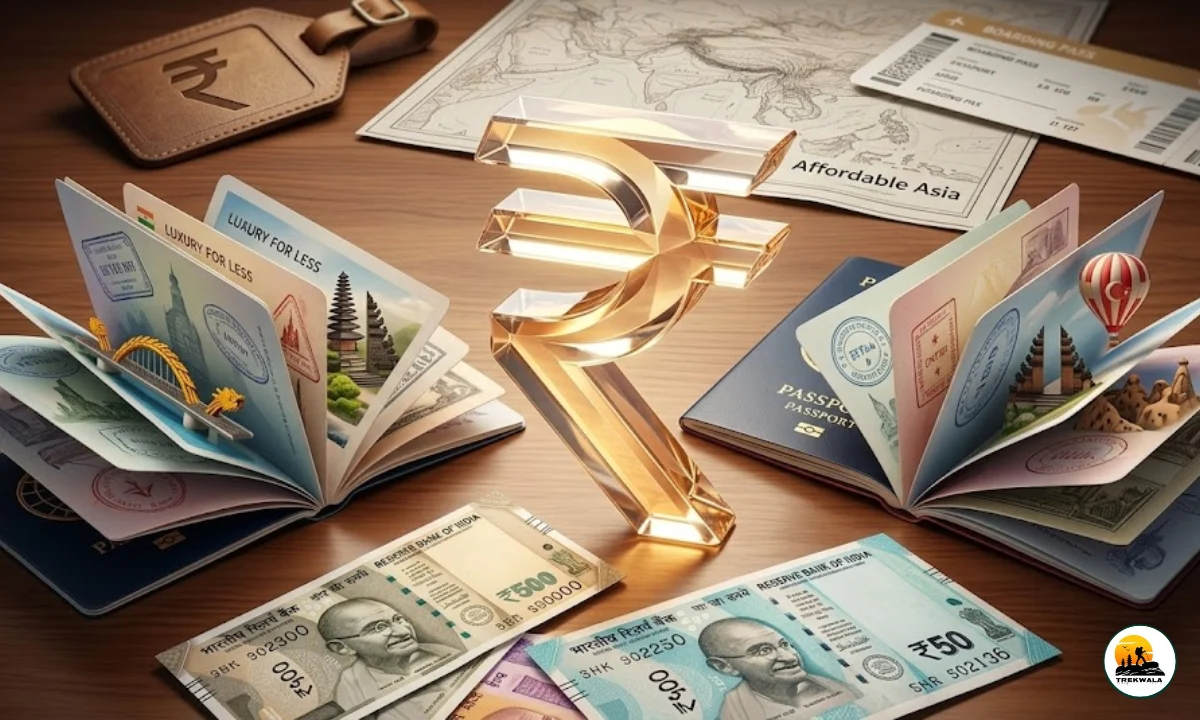
(Luxury for Less) Countries Where The Indian Rupee Is Strongest Right Now in 2026
Most people believe that international travel is expensive by definition. Book flights, convert rupees, watch your budget shrink instantly. But here is something that experienced Indian travelers already know. There is a very different kind of international trip possible right now, one where your rupee does not just survive in a foreign country, it thrives.
In several destinations across Southeast Asia, South Asia, and beyond, the Indian Rupee currently buys hundreds or even thousands of units of local currency. What this means practically is that the kind of travel most Indians can only dream about within India, private villas, full-day spa packages, gourmet restaurant meals, premium guided tours, and beachfront resorts, becomes genuinely affordable abroad.
With the INR hovering around ₹93 to ₹94 per US Dollar in April 2026, the rupee is not at its strongest against Western currencies. But against the Vietnamese Dong, Indonesian Rupiah, Sri Lankan Rupee, Cambodian Riel, and several others, the purchasing power multiplier is extraordinary. Indian travelers are increasingly discovering this reality and responding by booking longer trips, upgrading their accommodation, and spending more on experiences rather than worrying about counting every rupee.
Exchange Rate Overview: April 2026
Here is a quick reference for where the Indian Rupee stands strongest right now.
| Country | Currency | Approx Rate (1 INR) | What This Means Practically |
|---|---|---|---|
| Vietnam | Vietnamese Dong (VND) | 290 to 330 VND | Street food for ₹100, luxury resorts from ₹3,000/night |
| Indonesia | Indonesian Rupiah (IDR) | 185 to 193 IDR | Premium Bali villas feel affordable |
| Laos | Lao Kip (LAK) | 8,000+ LAK | Scenic luxury at extremely low prices |
| Cambodia | Cambodian Riel (KHR) | 44 to 58 KHR | Angkor Wat tours and boutique stays |
| Sri Lanka | Sri Lankan Rupee (LKR) | 3.4 to 3.5 LKR | Beach resorts cheaper than many Indian hotels |
| Nepal | Nepalese Rupee (NPR) | 1.6 NPR | Himalayan treks and cultural stays |
| Uzbekistan | Uzbekistani Som (UZS) | 200+ UZS | Silk Road architecture and hospitality |
| Hungary | Hungarian Forint (HUF) | 4.3 HUF | European experience without European prices |
| Paraguay | Paraguayan Guarani (PYG) | 87 to 89 PYG | South America's most affordable destination |
| Tanzania | Tanzanian Shilling (TZS) | 30 TZS | Safari at far lower cost than other African countries |
Exchange rates are approximate as of April 2026. Always verify current rates before travel.
1. Vietnam: Where Your Rupee Feels Like a King's Ransom
Vietnam is the top recommendation on almost every Indian traveler's list right now and the reason is simple. At approximately 290 to 330 Vietnamese Dong per Indian Rupee, your money multiplies dramatically the moment you land.
A hearty bowl of pho at a good local restaurant costs around ₹100 to ₹200. A proper mid-range hotel room in Hanoi or Ho Chi Minh City runs ₹1,500 to ₹3,000 per night. Luxury beach resorts in Da Nang or Phu Quoc that would cost the equivalent of ₹15,000 to ₹20,000 per night in an Indian coastal destination come in at ₹3,000 to ₹8,000 here. Private cruises through Ha Long Bay, which is one of the most visually spectacular experiences in all of Asia, cost a fraction of what comparable experiences cost elsewhere.
Indian travelers are increasingly booking 10 to 14 day Vietnam trips rather than the traditional 5 to 7 day packages. The logic is straightforward. When daily expenses including accommodation, food, local transport, and activities run ₹3,000 to ₹6,000 per person, a longer trip is not significantly more expensive than a short one.
Must experience: Overnight cruise in Ha Long Bay, rice terrace trekking in Sapa, exploring the ancient town of Hoi An on a rented bicycle, and street food tours in both Hanoi and Ho Chi Minh City.
2. Indonesia and Bali: Premium Villas at Mid-Range Prices
At around 185 to 193 Indonesian Rupiah per Indian Rupee, Bali and the broader Indonesian archipelago offer some of the most extraordinary value for money anywhere in Asia. The numbers become even more striking when you look at what you can actually book.
Private pool villas in Ubud, which is the cultural heartland of Bali surrounded by rice terraces and jungle, start from around ₹4,000 to ₹6,000 per night. These are not basic rooms. These are private compounds with their own pools, outdoor living areas, and daily breakfast included. The equivalent property in Goa or a comparable Indian hill station would cost three to four times more.
Full day spa packages including multiple treatments cost ₹1,500 to ₹3,000. Island hopping between Bali, Lombok, and the Gili Islands is affordable enough to do multiple times in a single trip. Cooking classes, surfing lessons, rice terrace walks with a private guide, and temple ceremonies all come at prices that make extended, immersive travel genuinely accessible.
Beyond Bali, Yogyakarta offers ancient temples like Borobudur and Prambanan alongside excellent local cuisine and crafts. The Komodo Islands provide dramatic wildlife and diving. Indonesia's 17,000-plus islands mean that no matter how many times you visit, there is always another experience waiting.
Must experience: Private pool villa stay in Ubud, sunrise Borobudur temple tour, diving or snorkeling around the Gili Islands, and a traditional Balinese cooking class.
3. Sri Lanka: Better Than Goa & Half the Price
Sri Lanka has emerged as one of the strongest value propositions for Indian travelers in 2026 and Indian social media has noticed. Comments comparing Sri Lanka favorably to Goa are everywhere. The feedback is consistent: better scenery, better hospitality, less crowded, and 30 to 50 percent cheaper for comparable quality accommodation.
At approximately 3.4 to 3.5 Sri Lankan Rupees per Indian Rupee, the currency advantage is not as dramatic as with Vietnam or Indonesia. But Sri Lanka punches far above its weight because of what exists here. World-class beach resorts along the southern coast near Mirissa and Unawatuna. Colonial tea estate bungalows in the Ella and Nuwara Eliya highlands. Ancient temples and ruins in the Cultural Triangle. And arguably the most beautiful train journey in Asia on the Kandy to Ella route through misty hills and tea plantations.
A three-star beach resort in Mirissa during shoulder season costs around ₹4,000 to ₹6,000 per night. A five-star property runs ₹9,000 to ₹14,000. Indian travelers who have redeemed credit card points for Sri Lanka hotel stays consistently report getting extraordinary value. The flight from southern Indian cities is barely an hour.
Must experience: Kandy to Ella train journey, whale watching in Mirissa, Sigiriya rock fortress at sunrise, and Ayurvedic treatments at a proper wellness resort.
4. Nepal: Himalayan Luxury Without the Forex Pain
Nepal occupies a unique position in this list. At 1.6 Nepalese Rupees per Indian Rupee, the exchange rate advantage is modest. But Nepal is also the one destination where Indian travelers face almost no friction. Visa-free entry, shared cultural references, Hindi widely understood, and Indian currency accepted in many places make Nepal feel like a familiar yet exotic destination simultaneously.
What you get for your money here is extraordinary. The Everest Base Camp trek covers some of the most spectacular mountain scenery on earth. Pokhara offers paragliding over Phewa Lake with Annapurna massif views as a backdrop. Mountain flight experiences that give you aerial views of Everest and other Himalayan peaks without trekking cost around ₹8,000 to ₹12,000. Boutique heritage hotels in Kathmandu's Thamel neighborhood, traditional Newari lodges near Bhaktapur, and high-altitude teahouses on trekking routes all represent exceptional value.
Must experience: Everest mountain flight from Kathmandu, paragliding over Pokhara, exploring the medieval streets and temples of Bhaktapur, and a sunrise viewpoint visit at Nagarkot.
5. Cambodia: Ancient History for Almost Nothing
Cambodia runs on both US Dollars and Cambodian Riel simultaneously, which can make pricing feel slightly complicated. But at 44 to 58 Cambodian Riel per Indian Rupee, your money goes extraordinarily far here.
Angkor Wat, the largest religious monument in the world and the defining image of Cambodia, deserves far more than a day. A three-day Angkor Archaeological Park pass covering Angkor Wat, Angkor Thom, Ta Prohm, and dozens of smaller temples costs approximately USD 72, which is about ₹6,800. That is a small price for access to one of humanity's greatest architectural achievements. Budget accommodation near the temple complex costs ₹800 to ₹1,500 per night. Better boutique hotels run ₹2,000 to ₹4,000.
Siem Reap, the gateway town for Angkor, has a lively restaurant scene where a full meal at a good restaurant costs ₹300 to ₹700. Phnom Penh offers important historical sites and cultural experiences. The southern coast at Sihanoukville and Kep has beach options that remain far less crowded than most equivalent Southeast Asian beaches.
Must experience: Sunrise at Angkor Wat, jungle temple exploration at Ta Prohm, cycling through the broader Angkor Archaeological Park, and a cooking class featuring Khmer cuisine.
6. Laos: The Quiet Luxury Escape Almost Nobody Talks About
Laos is perhaps the most underrated destination on this entire list. At over 8,000 Lao Kip per Indian Rupee, the exchange rate is extraordinary. And because Laos receives a fraction of the tourists that Vietnam, Thailand, or Cambodia do, the prices reflect genuine local economics rather than inflated tourist pricing.
Luang Prabang, a UNESCO World Heritage city, is one of the most serene and beautiful small cities in Asia. Colonial-era buildings line the Mekong riverside, Buddhist monks collect alms in silent early morning processions, and waterfalls an hour outside the city offer some of the most beautiful swimming holes anywhere. Boutique guesthouses in converted colonial villas cost ₹2,000 to ₹4,000 per night. Boat trips along the Mekong to the Pak Ou Caves run around ₹800 to ₹1,500 per person.
The capital Vientiane is relaxed in a way that most Southeast Asian capitals are not. The Vang Vieng area offers river tubing, kayaking, and hot air ballooning through dramatic limestone karst scenery.
Must experience: Alms giving ceremony in Luang Prabang at dawn, boat trip to Pak Ou Caves, Kuang Si Waterfall swim, and sunset drinks on the Mekong at a riverside restaurant.
7. Uzbekistan: The Silk Road Luxury Hidden Gem
Uzbekistan is the emerging choice for Indian travelers who want something completely different from the Southeast Asia circuit. At over 200 Uzbekistani Som per Indian Rupee, the purchasing power is strong. And what exists here is unlike anything in Asia.
Samarkand's Registan Square, with its three massive madrasas faced in blue tilework and mosaics, is one of the most visually stunning architectural ensembles in the world. The old cities of Bukhara and Khiva are extraordinarily well preserved historic urban landscapes. The food, the bazaars, the hospitality, and the Silk Road history make Uzbekistan deeply immersive.
Premium boutique hotels in restored traditional merchant houses cost ₹4,000 to ₹8,000 per night. A full day guided tour of Samarkand's major monuments costs around ₹2,000 to ₹3,000. The overall daily budget for a comfortable Uzbekistan trip runs well under what a similar quality trip to any European destination would cost.
Must experience: Registan Square in Samarkand at golden hour, the old city of Bukhara, the ice-walled Khiva old town, and a traditional plov cooking experience.
8. Hungary: Europe Without the European Price Shock
For Indian travelers who want a European experience without spending European prices, Hungary offers something no other EU country can quite match. Budapest is genuinely one of the most beautiful cities in Europe. At approximately 4.3 Hungarian Forint per Indian Rupee, it is also the most affordable significant European destination.
The city straddles the Danube with grand 19th-century architecture on both banks. The thermal bath culture is unique to Hungary and Budapest has some of the most beautiful historic bath complexes in the world. An entry to Szechenyi Baths, the most famous of them, costs approximately ₹1,200 to ₹1,500. A mid-range Budapest hotel in a good location costs ₹4,000 to ₹7,000 per night. A full dinner at a proper traditional Hungarian restaurant with multiple courses and wine runs ₹1,500 to ₹2,500 per person.
Must experience: Szechenyi Thermal Baths, sunset cruise on the Danube, exploring the ruin bars of the Jewish Quarter, and the panoramic view from Fisherman's Bastion.
Real Traveler Voices: What Indians Are Actually Saying (Data From X)
The excitement about these destinations is not just in guidebooks. It is active and ongoing in Indian travel communities on social media.
Vietnamese and Bali trips are regularly described as feeling premium despite being budget trips. Comments like "quality resorts this cheap, food, transport, experiences are equally good" and treating them as new favorites over traditional destinations appear consistently.
Sri Lanka comparisons to Goa are particularly strong. Travelers note getting better views, better stays, and lower prices than comparable Goa experiences. The Kandy-Ella train journey specifically receives nearly universal praise as one of the most beautiful things they have done.
The broader sentiment across Indian travel communities is clear. Europe is increasingly being mentally filed as a luxury destination only trip, while Southeast Asia and nearby South Asian destinations are being claimed for regular, extended, high-quality travel. The phrase stop thinking cheap, start thinking currency advantage captures the shift in mindset very well.
Practical Tips to Maximize Your Rupee Abroad
- Check rates before you leave and again when you arrive. Exchange rates move. The figures in this article are April 2026 approximations. Use apps like XE or Wise for real-time checking.
- Carry a mix of cash and international debit or credit cards. Local markets and street food operate on cash. Resorts and larger restaurants accept cards. Having both gives you flexibility.
- Book accommodation directly or through local agencies when possible. International booking platforms sometimes add fees that eliminate part of your currency advantage. Direct hotel booking, especially for smaller boutique properties, often gets you better rates.
- Travel during shoulder season. October to March is peak season for most Southeast Asian destinations and prices rise accordingly. April to June before monsoon, or September just after, can offer 20 to 30 percent lower accommodation rates with nearly equal weather.
- Upgrade your accommodation, not just your budget. The currency advantage is best used by upgrading your travel experience rather than simply saving money. Book the private villa instead of the hostel. Choose the beachfront resort instead of the inland hotel. Spend on the private guide. These upgrades cost a modest amount in rupees but transform the experience completely.
- Leverage credit card reward points. Several Indian credit cards earn points on travel spending and allow redemption at partner hotels internationally. Sri Lanka and Vietnam in particular have strong Marriott and IHG hotel presence where point redemptions can be very valuable.
- Purchase travel insurance before you go. Lower local prices do not mean lower medical costs in tourist zones or lower emergency evacuation costs. A comprehensive travel insurance policy protects the entire trip investment.
My Final Thoughts
The Indian Rupee's story in 2026 is not a simple one. Against the US Dollar and Euro, it faces real pressure. But against the currencies of Vietnam, Indonesia, Sri Lanka, Cambodia, Laos, Nepal, and several others, the purchasing power multiplier creates travel opportunities that most Indians have not yet fully taken advantage of.
The shift in mindset that Indian travelers are making right now is from thinking about international travel as expensive to thinking about it as a currency advantage waiting to be used wisely. When ₹1 buys you 300 Vietnamese Dong or 190 Indonesian Rupiah, you are not a budget traveler in those countries. You are an empowered one. Start planning. The rupee is ready. The destinations are extraordinary. And right now, the timing could not be better.


Categories
- Domestic 33
- News 9
- Info 8
- Budget Travel 5
- popular 5
- International 3
- Upcoming 1
Share This Post